
Shy or Scared Cat? Learn How to Build Trust and Confidence.
Building trust with a shy or scared cat takes patience, understanding, and consistency. Discover proven strategies to help fearful cats feel safe, reduce anxiety, and develop a strong bond with their owners through positive reinforcement and gentle interactions.
Introduction.
Learning how to build trust with a shy or scared cat can feel challenging, especially when your feline companion hides, avoids interaction, or seems nervous around people.
Many cats develop fearful behavior due to past trauma, lack of socialization, sudden environmental changes, or naturally cautious personalities.
The good news is that with patience, consistency, and positive reinforcement, even the most timid cat can learn to feel safe and secure.
Understanding shy cat behavior and recognizing the signs of a fearful cat are essential steps toward creating a strong bond. By providing a calm environment, respecting boundaries, and using gentle trust-building techniques, you can help your cat gain confidence over time.
Whether you’ve recently adopted a rescue cat or want to improve your relationship with a nervous pet, these proven tips will help you build lasting trust and strengthen your connection.
Table of contents.
1.Why Some Cats Are Shy or Scared
2.Understanding Fearful Cat Behavior
3.Creating a Safe Space for Your Cat
4.How to Approach a Shy Cat Correctly
5.Using Treats and Positive Reinforcement
6.Building Trust Through Daily Routine
7.The Importance of Play and Enrichment
8.Mistakes That Can Damage Trust
9.My Personal Experience
10.Building Trust With a Scared Cat
11.Recommended Products for Shy Cats
12.Natural Resources That Help Cats Feel Safe
13.Frequently Asked Questions (FAQs)
14.Conclusion
Why Some Cats Are Shy or Scared.
Many cat owners wonder why their feline companion seems nervous, withdrawn, or fearful. A shy or scared cat may have experienced limited socialization during kitten hood, traumatic events, frequent environmental changes, or neglect in the past. Some cats are naturally more cautious due to their personality and genetics.
Understanding the root cause of fear is the first step in learning how to build trust with a shy or scared cat. Fearful cats often hide under furniture, avoid eye contact, refuse interaction, or become startled by sudden noises. Instead of forcing socialization, focus on providing security and predictability.
Giving your cat control over interactions helps reduce anxiety and creates positive associations with your presence. Patience is essential because trust develops gradually.
Every cat has a unique comfort level, and respecting their boundaries encourages emotional security. Recognizing the reasons behind fearful behavior allows you to respond with compassion and helps establish a foundation of trust that supports long-term confidence and wellbeing.
Understanding Fearful Cat Behavior.
Recognizing feline body language is crucial when helping a scared cat. Cats communicate through posture, facial expressions, vocalizations, and tail movements.
A frightened cat may flatten its ears, crouch low to the ground, puff up its fur, or hide for extended periods. Some while others may hiss or swat defensively.
These reactions are often signs of fear rather than aggression. Learning how to build trust with a shy or scared cat involves understanding these signals and responding appropriately.
Avoid direct staring, sudden movements, or loud voices that may increase stress. Instead, sit quietly nearby and allow the cat to observe you from a safe distance.
Consistent, calm behavior teaches your cat that you are not a threat. Over time, observing and respecting your cat’s communication helps create a stronger emotional connection.
Understanding fearful behavior enables you to adjust your approach and support your cat’s journey toward confidence and trust.
Creating a Safe Space for Your Cat.
A secure environment plays a major role in helping a fearful cat relax. Every shy cat needs a designated area where they feel protected and can retreat when overwhelmed.
This safe space can include a quiet room, cozy bed, covered cat cave, scratching post, food and water bowls, and a clean litter box. When learning how to build trust with a shy or scared cat, remember that forcing interaction inside their safe area can damage trust.
Allow your cat to come and go freely while maintaining a calm atmosphere. Reducing loud noises, limiting visitor traffic, and providing vertical spaces like cat trees can help your cat feel more in control.
Familiar scents, soft bedding, and predictable surroundings also contribute to emotional comfort. As your cat gains confidence, they will naturally begin exploring more of their environment.
A safe space provides the foundation for trust-building and helps fearful cats gradually adjust to their new surroundings.
How to Approach a Shy Cat Correctly.
Approaching a timid cat requires patience and respect for their comfort level. Many people unintentionally scare cats by reaching toward them too quickly or attempting to pick them up.
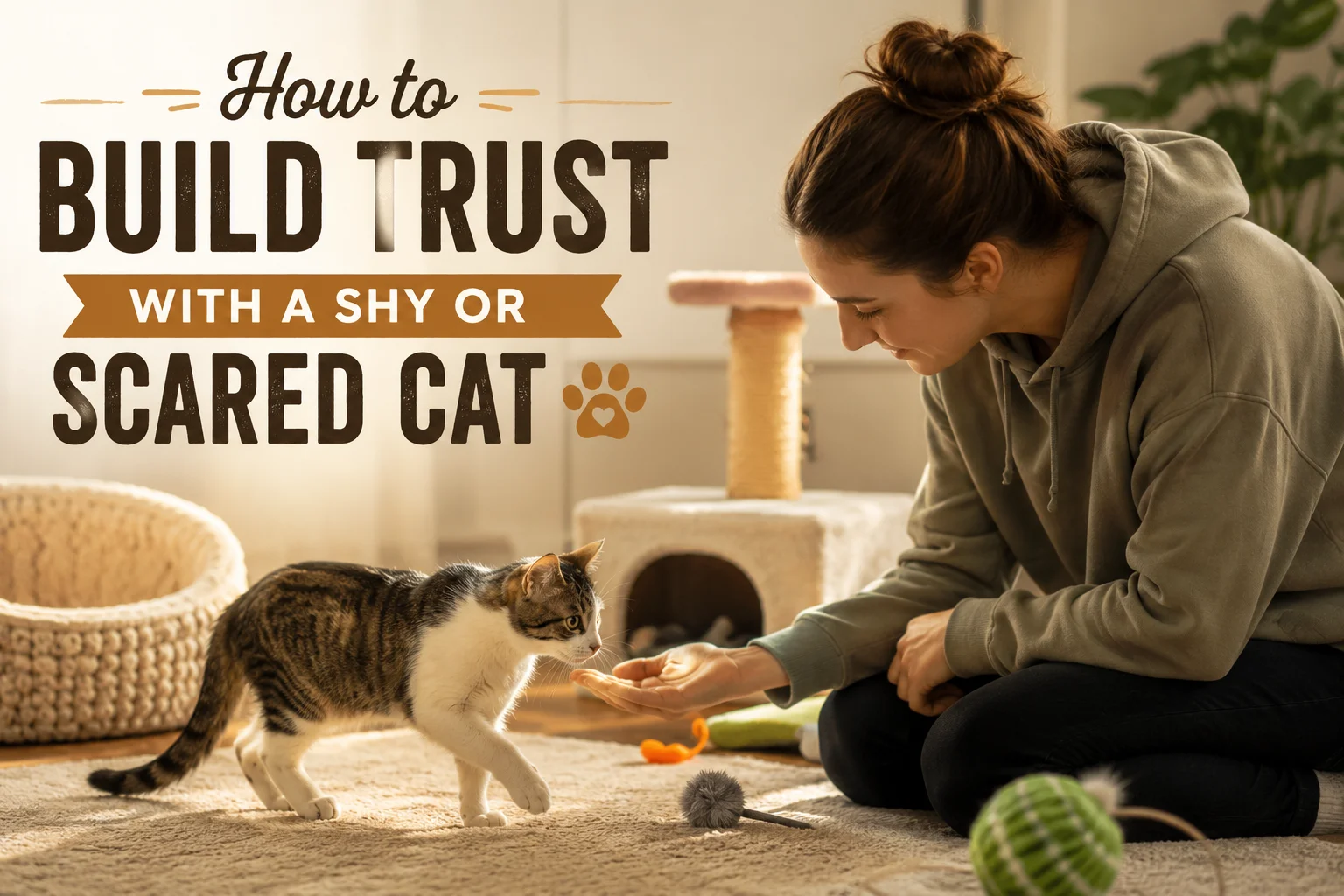
Instead, sit quietly at a distance and allow your cat to approach you voluntarily. When practicing how to build trust with a shy or scared cat, avoid direct eye contact and use slow, relaxed movements.
Offering your hand for the cat to sniff can help establish familiarity. Speak softly and use a calm tone of voice during interactions. If the cat retreats, avoid following them.
Giving them control over social encounters helps reduce fear and increases confidence. Reward any positive interaction with praise or treats.
Over time, your cat will begin associating your presence with safety and positive experiences. Consistent, non-threatening behavior is one of the most effective ways to build trust and strengthen your relationship with a fearful feline companion.
Using Treats and Positive Reinforcement.
Positive reinforcement is one of the most powerful tools for earning a cat’s trust. Treats, gentle praise, and rewarding desired behavior encourage your cat to associate you with positive experiences.
When learning how to build trust with a shy or scared cat, start by placing treats near your cat’s hiding spot without forcing interaction. Gradually decrease the distance as your cat becomes more comfortable.
High-value treats can motivate nervous cats to explore and engage. Interactive feeding sessions, treat puzzles, and hand-feeding can further strengthen trust once your cat feels safe enough.
Never punish fearful behavior, as punishment increases anxiety and damages confidence. Instead, celebrate small successes and allow progress to happen naturally.
Positive reinforcement creates a sense of security and helps your cat understand that interacting with you leads to good things.
Consistency and patience are essential for achieving lasting results and developing a trusting relationship.
Building Trust Through Daily Routine.
Cats thrive on consistency and predictability. Establishing a regular schedule for feeding, playtime, cleaning, and quiet interaction helps reduce stress and build confidence.
A reliable routine teaches your cat what to expect each day, making their environment feel safer. If you’re focused on how to build trust with a shy or scared cat, maintaining consistency is crucial.
Feed your cat at the same times, use gentle communication, and create predictable patterns of interaction. Over time, your cat learns that you provide safety, food, and comfort.
Routine also reduces uncertainty, which is a major source of anxiety for fearful cats. Even small daily interactions can strengthen trust when repeated consistently.
The more dependable your behavior becomes, the more secure your cat will feel. Building trust is often less about dramatic gestures and more about creating a stable, reassuring environment every day.
The Importance of Play and Enrichment.
Interactive play can help shy cats gain confidence while strengthening their bond with their owners. Toys that mimic prey, such as feather wands and interactive teasers, encourage natural hunting instincts and reduce stress.
When considering how to build trust with a shy or scared cat, play provides a low-pressure way to interact without forcing physical contact.
Enrichment activities such as puzzle feeders, scratching posts, window perches, and climbing trees also support emotional wellbeing.
These activities stimulate the mind and allow cats to express natural behaviors safely. Play sessions help release nervous energy and create positive experiences associated with your presence.
As confidence grows, many shy cats become more willing to engage socially. Consistent enrichment keeps your cat mentally and physically active while supporting the trust-building process.
A stimulated cat is often more relaxed, curious, and open to forming deeper relationships with family members.
Mistakes That Can Damage Trust.
Building trust takes time, but it can be damaged quickly by certain actions. Common mistakes include forcing physical contact, chasing a hiding cat, punishing fearful behavior, or exposing the cat to overwhelming situations.
If your goal is learning how to build trust with a shy or scared cat, avoid rushing the process. Every cat progresses at their own pace.
Loud environments, sudden movements, and inconsistent routines can also increase stress and slow trust development. Ignoring your cat’s body language may cause them to feel unsafe or misunderstood.
Respecting boundaries and allowing your cat to make choices helps maintain a sense of control. Trust is built through repeated positive experiences rather than force.
By avoiding common errors and responding patiently to your cat’s needs, you create an environment where trust can grow naturally and sustainably over time.
My Personal Experience Building Trust With a Scared Cat.
When I first adopted a shy rescue cat, she spent most of her time hiding under the bed and avoided all interaction. During the first few weeks, I focused on creating a quiet environment and allowed her to observe me from a distance.
Instead of forcing affection, I sat nearby while reading or working and occasionally offered treats. Learning how to build trust with a shy or scared cat taught me the importance of patience.
Small signs of progress, such as accepting treats or sitting closer to me, became important milestones. After several months of consistent routines, gentle communication, and interactive play sessions, she began seeking attention on her own.
Today, she confidently explores the house and enjoys spending time with family members.
This experience reinforced that trust cannot be rushed, but with understanding and consistency, even the most fearful cats can become loving companions.
Recommended Products for Shy Cats.
- Feliway Classic Diffuser
- Covered Cat Bed
- Interactive Wand Toys
- Cat Tunnel
- Puzzle Feeders
- Elevated Cat Tree
- Soft Fleece Blankets
- Treat Dispensing Toys
Natural Resources That Help Cats Feel Safe.
- Quiet resting areas
- Cardboard boxes
- Window perches
- Scratching posts
- Cat-safe plants
- Consistent daily routine
- Soft bedding
- Natural hiding spaces
https://www.alleycat.org/resources/cat-behavior/
Frequently Asked Questions (FAQs).
How long does it take to build trust with a shy cat?
Every cat is different. Some cats may begin trusting their owners within a few weeks, while others may require several months of patience and consistent positive interactions.
Should I pick up a scared cat to comfort it?
No. Most fearful cats feel more stressed when forced into physical contact. Allow the cat to approach you voluntarily.
What is the best way to gain a cat’s trust?
Provide a safe environment, use positive reinforcement, maintain a routine, and respect the cat’s boundaries.
Can treats help a scared cat trust me?
Yes. High-value treats can create positive associations and encourage interaction without pressure.
Why does my cat hide all the time?
Hiding is a natural coping mechanism for fearful cats. Providing safe spaces and reducing stress can help increase confidence over time.
Is it normal for rescue cats to be shy?
Yes. Many rescue cats need time to adjust to new surroundings and learn that they are safe.
Conclusion.
Learning how to build trust with a shy or scared cat requires patience, understanding, and consistency.
By creating a safe environment, respecting boundaries, using positive reinforcement, and maintaining a predictable routine, you can help your cat feel secure and confident.
Trust develops gradually through positive experiences and gentle interactions. Every small step forward matters.
With time and dedication, even the most timid cat can become a loving, affectionate, and trusting companion.


