
Cat Body Language Explained: How to Understand What Your Cat Is Feeling.
Cat Body Language Explained helps cat owners understand what their feline companions are feeling through tail movements, ear positions, eye expressions, and body posture. Learn to recognize signs of happiness, stress, fear, and trust to build a stronger bond with your cat and improve daily communication.
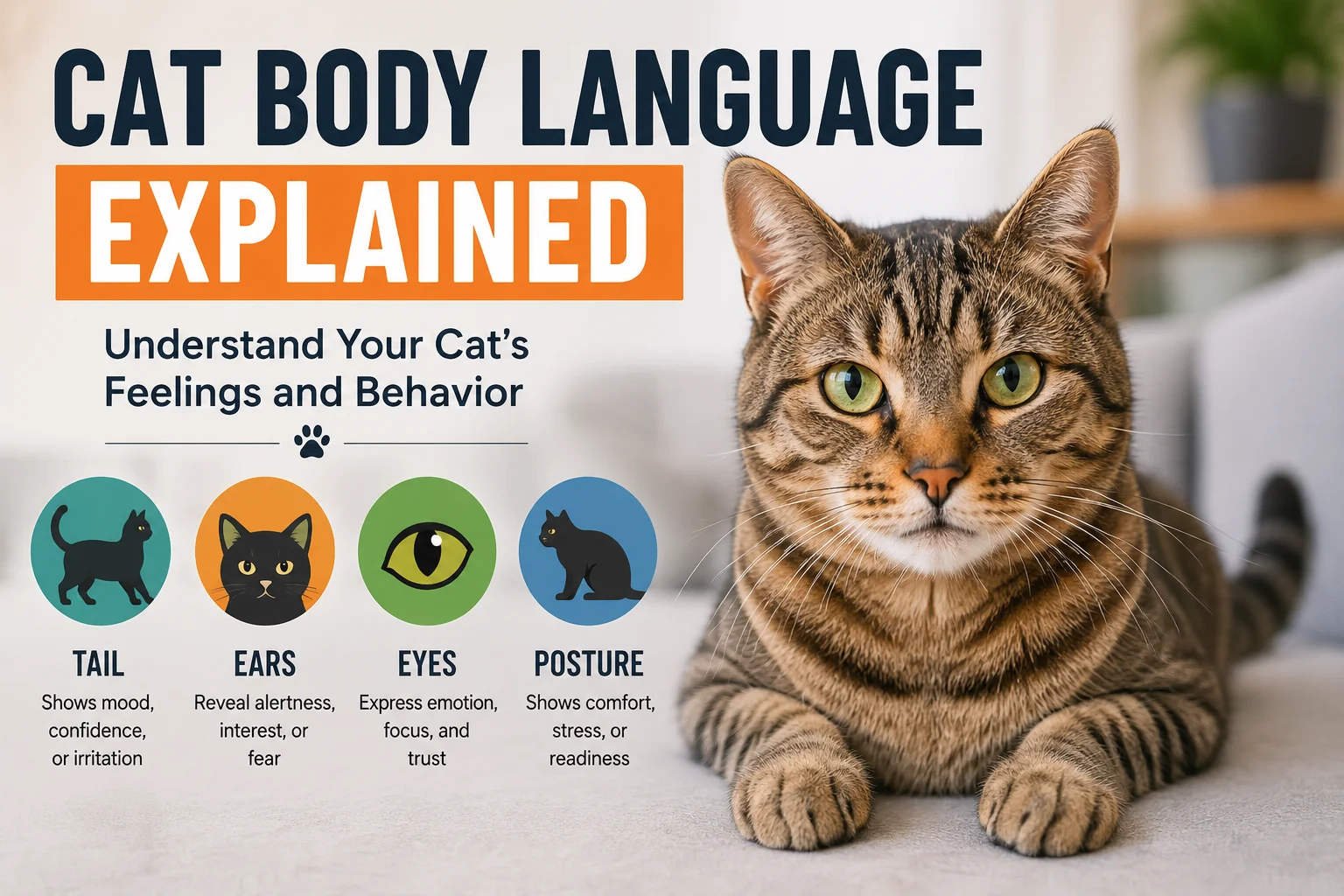
Introduction.
Cats may not speak our language, but they communicate with us every day through their body movements, facial expressions, tail positions, and vocal sounds.
Learning to read these signals can help you build a stronger bond with your feline companion and better understand their needs, emotions, and behavior.
In this guide, Cat Body Language Explained, you’ll discover what your cat is really trying to tell you when they flick their tail, flatten their ears, purr, or stare into your eyes.
Understanding these subtle cues can make life easier for both you and your cat, leading to a happier and more trusting relationship.
Table of contents.
1.Introduction.
2.Why Understanding Cat Body Language Matters.
3.Understanding Tail Signals.
4.What Ears and Eyes Reveal.
5.Common Cat Postures Explained.
6.Signs of Happiness and Relaxation.
7.Recognizing Fear and Stress.
8.How Cats Communicate with Humans.
9.Tips for Reading Your Cat Correctly.
10.My Personal Experience with Cat Body Language.
11. Frequently Asked Questions (FAQs).
12.Recommended Products and Helpful Resources.
13.Conclusion: Building a Stronger Bond Through Understanding.

Why Cat Body Language Matters.
Understanding your cat goes far beyond providing food, water, and a comfortable place to sleep. Cats communicate primarily through their body movements, facial expressions, and behavior. This is why learning Cat Body Language Explained is essential for every cat owner who wants to build a stronger relationship with their feline friend.
Cats Communicate Without Words.
Unlike humans, cats cannot tell us when they are happy, scared, stressed, or uncomfortable using words. Instead, they rely on subtle signals such as tail movements, ear positions, eye contact, and posture. By paying attention to these signs, you can better understand what your cat is feeling at any given moment.
Better Communication Leads to Better Care.
One of the biggest benefits of understanding cat behavior is improved communication. When you recognize the meaning behind your cat’s actions, you can respond appropriately. For example, a relaxed cat with a gently raised tail is usually feeling confident and friendly, while flattened ears and a puffed-up tail may indicate fear or aggression. Knowing the difference can help you avoid misunderstandings and prevent unwanted stress.
Recognizing Health and Emotional Changes.
Learning about feline communication can also improve your cat’s overall well-being. Cats often show early signs of anxiety, discomfort, or illness through changes in body language. A normally social cat that suddenly hides, avoids eye contact, or adopts a tense posture may be trying to signal that something is wrong. Recognizing these warning signs early can help you address potential problems before they become more serious.
Building Trust With Your Cat.
Another reason Cat Body Language Explained is so important is that it strengthens trust between you and your pet. Cats feel more secure when their owners understand and respect their boundaries. When you can identify whether your cat wants attention, playtime, or simply some space, you create a more positive and comfortable environment.
A Stronger Bond for Life.
Whether you are a first-time cat owner or have lived with cats for years, understanding cat body language can transform the way you interact with your pet. The more you learn to read their signals, the easier it becomes to meet their needs and develop a lasting bond based on trust and mutual understanding.
Understanding Tail Signals.
A cat’s tail is one of the clearest indicators of its emotions. In many cases, you can tell how your cat feels simply by observing its tail position and movement. When learning Cat Body Language Explained, understanding tail signals is an important first step.
A tail held upright usually indicates confidence, friendliness, and comfort. Cats often greet their favorite people with a straight, raised tail as a sign of trust. If the tip of the tail is slightly curved, it can mean your cat is feeling especially happy and relaxed.
A slowly swishing tail often shows curiosity or focus, especially when a cat is watching something interesting. However, a rapidly flicking or whipping tail may signal irritation, frustration, or overstimulation. If you notice this behavior while petting your cat, it may be a sign that your cat needs a break.
A puffed-up tail is usually associated with fear or feeling threatened. Cats instinctively make themselves appear larger when they perceive danger. In these situations, giving your cat space is often the best response.
A tail tucked close to the body can indicate nervousness, insecurity, or anxiety. By paying attention to these signals, cat owners can better understand feline emotions and respond appropriately.
What Ears and Eyes Reveal.
A cat’s ears and eyes provide valuable clues about its mood and intentions. These subtle features play a major role in Cat Body Language Explained and can help owners recognize emotional changes quickly.
Forward-facing ears usually indicate interest, confidence, and attentiveness. When a cat’s ears are pointed toward a sound or object, it is often focusing on something that has captured its attention.
Ears that rotate sideways may suggest uncertainty or mild discomfort. If the ears flatten against the head, the cat is likely frightened, defensive, or angry. This is a clear signal that the cat wants distance and should not be approached aggressively.
The eyes also reveal a lot about feline emotions. Slow blinking is often considered a sign of trust and affection. Many cat owners refer to it as a “cat kiss.” Returning a slow blink can help strengthen your bond with your pet.
Pupil size can change based on lighting, but it also reflects emotional states. Dilated pupils may indicate excitement, fear, or intense focus, while narrow pupils can sometimes signal confidence or irritation. Understanding these signals helps create a clearer picture of your cat’s feelings.
Common Cat Postures Explained.
Body posture is one of the most reliable ways cats communicate. Learning common positions is a key part of understanding Cat Body Language Explained.
A relaxed cat often lies comfortably on its side or sits with loose muscles. This posture indicates that the cat feels safe and secure in its environment.
When a cat rolls onto its back and exposes its belly, many people assume it wants a belly rub. However, this posture usually reflects trust rather than an invitation to touch. Some cats enjoy belly rubs, while others may react defensively.
A crouched posture with the body low to the ground can indicate fear or uncertainty. The cat may be preparing to flee if it feels threatened.
An arched back combined with raised fur is a classic defensive posture. Cats use this position to appear larger and more intimidating when facing something they perceive as dangerous.
Observing these postures alongside tail, ear, and eye movements provides a more complete understanding of feline behavior.
Signs of Happiness and Relaxation.
Every cat owner wants to know when their pet is truly content. Fortunately, cats display several clear signs of happiness that become easier to recognize once you understand Cat Body Language Explained.
A relaxed body is one of the strongest indicators of comfort. Happy cats often stretch out, curl up peacefully, or rest with their muscles completely relaxed.
Purring is commonly associated with satisfaction, although it can occasionally occur in other situations as well. When combined with relaxed body language, purring is usually a positive sign.
Slow blinking, gentle kneading, and seeking your company are also signs that your cat feels secure and comfortable. Many cats knead soft surfaces because it reminds them of kitten hood and creates a sense of relaxation.
A cat that confidently explores its environment, plays regularly, and approaches people willingly is generally experiencing positive emotions. These behaviors reflect trust and emotional well-being.
Recognizing Fear and Stress.
Cats are sensitive animals, and recognizing signs of fear and stress is essential for maintaining their health and happiness. This topic is an important part of Cat Body Language Explained.
Fearful cats often flatten their ears, crouch low, or tuck their tails close to their bodies. They may also hide, avoid interaction, or become unusually quiet.
Stress can appear in more subtle ways. Some cats groom excessively, become less active, or display sudden changes in behavior. Others may vocalize more frequently or avoid their usual routines.
Dilated pupils, tense muscles, and constant alertness are additional indicators that a cat may be feeling anxious. Environmental changes such as moving, loud noises, unfamiliar visitors, or new pets can trigger stress.
Recognizing these warning signs early allows owners to create a calmer environment and help their cats feel safe again.
How Cats Communicate with Humans.
Cats communicate with people in many different ways. While body language remains their primary method, they also use sounds and behaviors to express their needs.
One interesting aspect of Cat Body Language Explained is that cats often develop unique communication styles with their owners. They learn which behaviors get attention and adjust accordingly.
Meowing is one example. Adult cats rarely meow at each other but frequently use vocalizations to communicate with humans. Different meows can indicate hunger, greeting, attention-seeking, or discomfort.
Cats also communicate through rubbing, head bunting, and following their owners around the house. These actions often signal affection and trust. Even simple behaviors like sitting nearby can be a sign that your cat enjoys your company.
By observing both vocal and physical cues, owners can better understand what their cats are trying to communicate.
Tips for Reading Your Cat Correctly.
Learning to read feline behavior takes time, but a few simple strategies can make the process easier.
First, always look at the entire body rather than focusing on a single signal. Understanding Cat Body Language Explained requires observing the tail, ears, eyes, posture, and overall behavior together.
Second, consider the situation. A swishing tail during play may mean excitement, while the same movement during petting could indicate irritation.
Third, pay attention to changes in your cat’s normal behavior. Every cat has its own personality, so understanding your pet’s usual habits makes unusual signals easier to spot.
Finally, respect your cat’s boundaries. If body language suggests fear, stress, or discomfort, giving your cat space is often the best approach.
My personal experience.
When I first adopted my cat, I often misunderstood its behavior. Sometimes I thought a swishing tail meant happiness, but after learning more about Cat Body Language Explained, I realized it could also signal irritation or overstimulation. Over time, I started paying closer attention to tail movements, ear positions, and eye expressions. This helped me understand when my cat wanted attention, playtime, or simply some space.
One of the biggest changes I noticed was the trust that developed between us. By recognizing the signs of comfort, stress, and affection, I was able to respond to my cat’s needs more effectively. My experience taught me that understanding cat body language is not just about interpreting behavior—it’s about building a stronger and more meaningful bond with your feline companion.
Recommended Products and Helpful Resources.
Essential Products for Better Cat Care.
•Interactive Cat Toys.
https://www.amazon.com/s?k=interactive+cat+toys
•Cat Scratching Posts.
https://www.amazon.com/s?k=cat+scratching+post
•Cat Trees and Climbing Towers.
https://www.amazon.com/s?k=cat+tree
•Comfortable Cat Beds.
https://www.amazon.com/s?k=cat+bed
•Automatic Water Fountains for Cats.
https://www.amazon.com/s?k=cat+water+fountain
Trusted Resources for Learning About Cat Behavior.
•International Cat Care.
•ASPCA Cat Care Guide.
https://www.aspca.org/pet-care/cat-care
Pet MD Cat Behavior Resource Center.
Frequently Asked questions (FAQs)
How can I tell if my cat is happy?
A happy cat usually has a relaxed body, upright tail, soft eyes, and may purr or knead with its paws. Understanding these signs is an important part of Cat Body Language Explained.
Why does my cat slowly blink at me?
Slow blinking is often a sign of trust and affection. Many cat owners consider it a cat’s way of saying, “I feel safe with you.”
What does it mean when a cat’s tail is puffed up.
A puffed-up tail usually indicates fear, stress, or feeling threatened. Cats do this to make themselves appear larger and more intimidating.
Why are my cat’s ears flattened?
Flattened ears are often a sign that a cat feels scared, defensive, or angry. It’s usually best to give the cat some space until it calms down.
Does purring always mean a cat is happy?
Not always. While purring commonly signals contentment, some cats may also purr when they are stressed, anxious, or seeking comfort.
How can I recognize stress in my cat?
Common signs include hiding, flattened ears, excessive grooming, changes in appetite, dilated pupils, and unusual behavior patterns.
Why does my cat roll over and show its belly?
Showing the belly is often a sign of trust and comfort. However, it doesn’t always mean your cat wants its belly touched.
What is the best way to understand my cat’s feelings?
The best approach is to observe the entire body, including the tail, ears, eyes, and posture. This complete view is the foundation of Cat Body Language Explained and helps you accurately interpret your cat’s emotions.
Conclusion.
Understanding your cat’s body language is one of the most effective ways to strengthen your relationship and improve your pet’s quality of life. From tail movements and ear positions to posture and facial expressions, every signal provides insight into your cat’s emotions and needs.
As this guide on Cat Body Language Explained shows, cats are constantly communicating through subtle behaviors. By learning to recognize these signals, you can respond more effectively, build trust, and create a happier environment for your feline companion. The more attention you pay to your cat’s body language, the easier it becomes to understand what your pet is truly feeling.


2 Comments