
Why Is My Cat Always Watching Me? Hidden Reasons Behind Cat Staring.
Wondering why your cat keeps staring at you? This guide explains the hidden reasons behind cat staring behavior, from affection to instinct, and what it means for you.
Introduction.
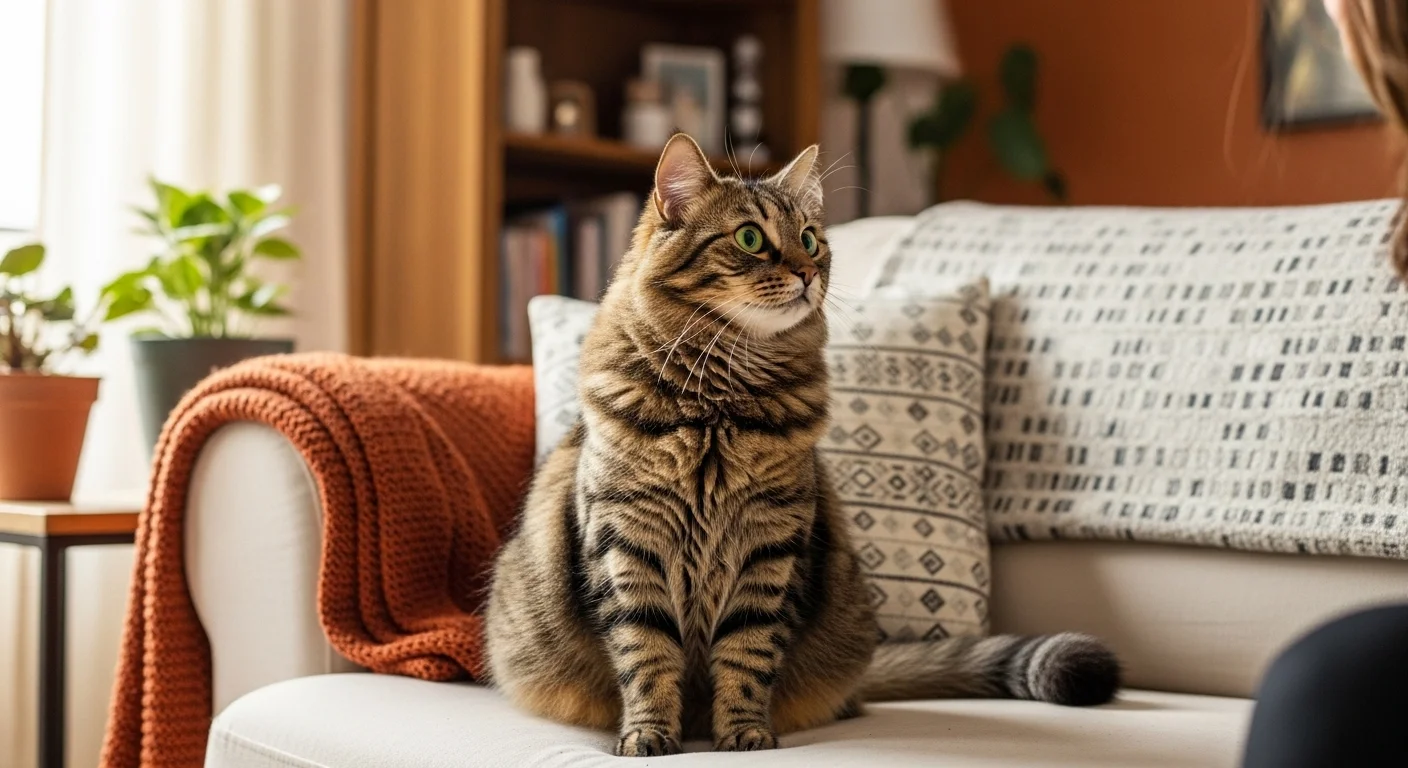
If you own a cat, you have likely seen this happen many times. Your cat sits quietly in a corner, on the sofa, or even on a shelf, just staring at you. There is no meowing or movement, just those eyes focused on you.
At first, it may feel cute. Later, it may feel confusing. And sometimes, it can even feel a little strange.
So the big question is: Why is my cat always watching me?
The truth is, cats are not just random observers. Their staring has meaning, emotion, instinct, and communication. Unlike humans, cats do not speak with words. They use their eyes, body language, and behavior to express themselves.
In this article, we will explore the hidden reasons behind your cat’s staring habit in simple English. You will also learn what to do when your cat stares at you. We will include practical tips, FAQs, and a personal experience to make everything more relatable.
Let’s understand your mysterious little friend better.
Whats inside the Article?
1.Introduction.
2.Why Do Cats Stare at You?
•Love and Attachment.
•Communication and Attention.
•Hunger or Routine Reminder.
•Curiosity and Observation.
•Hunting Instinct.
•Stress or Anxiety Signals.
•Health or Discomfort Signs.
3.What To Do When a Cat Stares at You.
4.My Recommended Tips (From Experience).
5.FAQs.
6.My Personal Experience with a Staring Cat.
7.Conclusion.
Why Do Cats Stare at You?

Cats do not stare without reason. Every long gaze has a purpose. Let’s break down the most common reasons behind this behavior.
1. Love and Attachment.

One of the most beautiful reasons is simple:your cat loves you.
It is common for cats to stare at individuals that they trust and feel safe with. If your cat blinks slowly while staring at you, then it means she trusts you and feels comfortable around you.This can be compared to when cats communicate through their eyes, and they usually blink slowly when they mean “I trust you.”
2. Communication and Attention Seeking.
Cats cannot talk, so they use eye contact as a tool to communicate.
Your cat may be staring at you because:
•It wants food.
•It wants playtime.
•It wants you to follow it somewhere.
•It simply wants attention.
If your cat stares and then walks away repeatedly, it is likely trying to “call you” in its own way.
3. Hunger or Routine Reminder.

Cats are creatures of habit. They get to know your habits very soon.When it is almost time to eat, some cats will look at you as if saying, “Don’t forget about me.”
Some even position themselves at the place where food is and continue looking at you until you acknowledge them.
4. Curiosity and Observation.

Cats are naturally curious creatures. They love to observe everything their humans do.
Your cat may be watching you because:
You are doing something interesting.
•You are moving differently.
•You are using a device or object it doesn’t understand.
•It is studying your behavior.
To a cat, you are part of its territory, and observing you is part of understanding its world.
6. Stress or Anxiety Signals.
Not all staring is positive. Sometimes, it can show discomfort.
A stressed or anxious cat may:
•Stare without blinking.
•Stay very still.
•Avoid physical contact.
•Look alert or tense.
This type of staring may mean your cat is unsure about something in its environment.
It could be:
•A new pet.
•Loud noise.
•Changes in routine.
•New people in the house.
7. Health or Discomfort Signs.
In rare cases, constant staring can be linked to health issues.
If your cat:
•Stares excessively.
•Acts confused.
•Shows unusual behavior.
•Stops responding normally.
What To Do When a Cat Stares at You.

Now that you know why cats stare, the next question is:what should you do?
Here are some simple and helpful responses:
1. Blink Slowly Back.
If your cat is calm, try slow blinking. It builds trust and shows affection.
2.Talk Softly.
Cats respond to tone more than words. A gentle voice makes them feel safe.
3. Observe Body Language.
Check if your cat is relaxed or tense. This helps you understand its mood.
4. Respond to Needs.
If it stares near feeding time or leads you somewhere, it may need food, water, or play.
5.Give Space if Needed.
If the stare feels intense or stressful, do not force interaction. Let the cat relax.
My Recommended Points (Simple Advice from Experience).
Here are some short and useful tips based on common cat behavior:
•Never assume staring is “bad”—most of the time it is communication.
•Pay attention to timing (food time, play time, routine matters).
•Build trust with slow blinking and calm behavior.
•Do not ignore repeated staring—it often has a reason.
•Keep your cat mentally active with toys and interaction.
•Watch for sudden changes in staring behavior.
•If unsure, always observe before reacting.
These small habits can improve your bond with your cat a lot.
FAQs.
1. Is it normal for cats to stare at their owners?
Yes, it is completely normal. Cats use staring as a form of communication and observation.
2. Why does my cat stare at me without blinking?
It could mean focus, curiosity, or sometimes alertness. If the cat seems tense, check its environment.
3. Do cats stare at people they love?
Yes. Calm staring with slow blinking is often a sign of trust and affection.
4. Why does my cat stare at me while I sleep?
Your cat may be curious, checking on you, or waiting for you to wake up for routine activities.
5. Should I be worried if my cat stares a lot?
Usually no. But if the behavior is new, intense, or paired with other unusual signs, observe carefully.
6. Can staring mean my cat is sick?
In rare cases, yes. If it comes with other symptoms like confusion or behavior change, consult a vet.
My Personal Experience with a Staring Cat.

I once had a cat named” Leo “. He had a strange habit of sitting at the end of my bed and just staring at me every morning.
At first, I thought something was wrong. But over time, I noticed a pattern. He always stared right before breakfast time. If I ignored him, he would slowly walk toward the kitchen and look back at me again.
It was his way of saying, “It’s time to eat.”
But there were also moments when he stared at me while I was working. In those moments, I realized he wasn’t asking for anything—he was simply sitting with me, observing quietly. It felt like silent companionship.
That experience taught me something important:Cats do not just stare randomly. They communicate in silence.
External Resources.
To better understand your cat’s behavior, you can also explore these trusted resources:
1. American Society for the Prevention of Cruelty to Animals (ASPCA).
https://www.aspca.org/pet-care/cat-care/cat-behavior
2.International Cat Care.
https://icatcare.org/advice/cat-behaviour/
3. Cornell Feline Health Center.
https://www.vet.cornell.edu/departments-centers-and-institutes/cornell-feline-health-centre
4.RSPCA (Royal Society for the Prevention of Cruelty to Animals).
https://www.rspca.org.uk/adviceandwelfare/pets/cats.

Conclusion.
So, why is your cat always watching you?
The answer is simple yet deep—it can be love, curiosity, communication, routine, or instinct. Cats are intelligent and emotional creatures who express themselves in quiet ways rather than loud actions.
Instead of feeling confused, try to observe your cat’s body language and timing. Most of the time, that silent stare is not strange at all—it is meaningful.
Your cat is not just watching you.It is connecting with you in its own unique language.
And once you understand that, those silent stares start to feel less mysterious—and a lot more special.
About the Author.
Jibran Abbas is a passionate pet enthusiast and content writer who focuses on simplifying complex animal behaviors into easy-to-understand language. With a deep interest in feline psychology and everyday pet care, he aims to help cat owners better understand their pets and build meaningful connections. His writing style is simple, human, and practical, making it accessible for readers of all levels.
Disclaimer
This article is for informational purposes only and is not a substitute for professional veterinary advice, diagnosis, or treatment. Always seek guidance from a qualified veterinarian or animal care professional if you have concerns about your cat’s health or behavior.While every effort has been made to ensure accuracy, individual cats may behave differently, and interpretations may vary depending on the situation.


