
How to Stop Your Cat from Scratching Furniture Naturally at Home.
Discover how to stop your cat from scratching furniture naturally at home using simple training techniques, natural deterrents, scratching posts, and pet-safe solutions that protect your furniture and keep your cat happy.
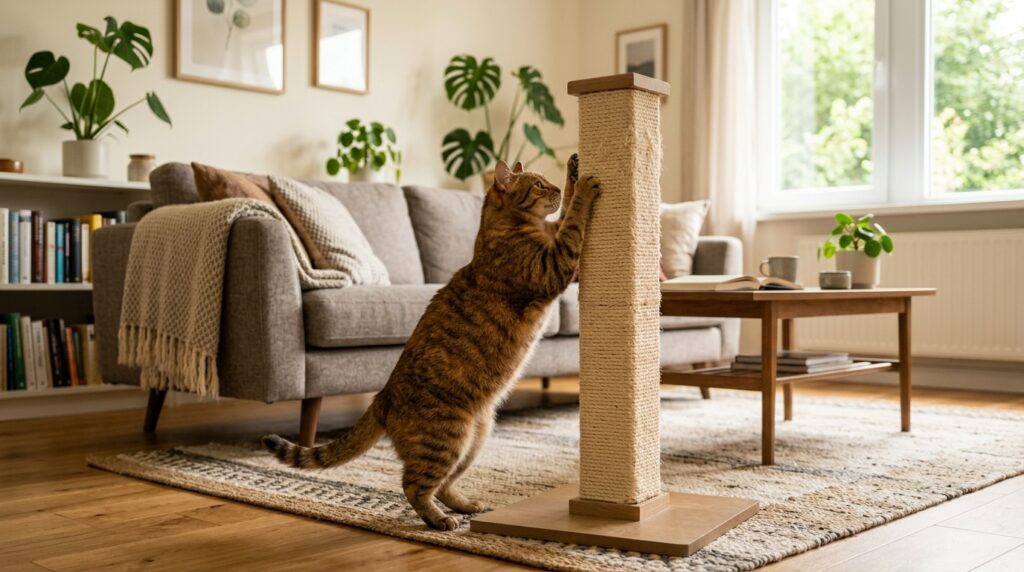
Introduction.
If your cat is scratching your furniture, you are not alone. Many cat owners struggle with this issue daily. The good news is that you can stop your cat from scratching furniture naturally at home without stress or punishment.
Cats scratch furniture because it is part of their natural behavior. They do it to sharpen their claws, mark territory, and release energy. Instead of stopping this behavior completely, the goal is to redirect it in a smart and natural way.
In this Article,you will learn how to stop your cat from scratching furniture naturally at home, using simple, effective, and professional methods that are easy to follow.
Inside the Article?
1.Introduction
2.Why Cats Scratch Furniture.
3.Natural Tips at Home.
4.How to Stop your Cat from Scratching Furniture.
5.Smart Solutions That Work.
6.Recommended Products (With Links).
7.Personal Experience.
8.FAQs.
9.Final thoughts.
10.Conclusion.
2.Why Cats Scratch Furniture.
To successfully stop your cat from scratching furniture naturally at home, you must first understand why cats do it.
Cats scratch furniture because:
•To maintain healthy claws.
•To mark territory using scent glands.
•To stretch their muscles.
•To reduce stress and boredom.
Scratching is not bad behavior—it is completely natural. That’s why the right approach is to guide your cat, not punish it.
3.Natural Tips at Home.
These are the best natural methods to stop your cat from scratching furniture naturally at home:
1.Citrus Spray Method.
Cats dislike citrus smells.
How to use:
•Mix water with lemon juice
•Spray lightly on Furniture.
2.Aluminum Foil Trick.
Cats avoid foil because of its texture and sound.
•Place foil on scratching areas.
•Remove once behavior improves.
3.Double-Sided Tape.
Sticky surfaces stop cats from scratching.
•Apply tape on furniture edges.
•Safe and effective.
4.DIY Scratching Post.
Create a scratching post using:
•Cardboard
•Rope
•Wood
6.Nail Trimming.
Regular nail trimming reduces damage and helps control scratching.
4.How to Stop Your Cat from Scratching Furniture.
Here is a proven system to stop your cat from scratching furniture naturally at home:
1.Do Not Punish Your Cat.
Punishment can make your cat anxious and confused. It will not solve the problem.
2.Provide a Better Alternative.
Introduce scratching posts or boards so your cat has a proper place to scratch.
3.Make Furniture Less Attractive.
Use natural deterrents like smell and texture to stop scratching.
4.Reward Positive Behavior.
When your cat avoids furniture and uses the right place, reward it.
5.Smart Solutions That Work.
To stop your cat from scratching furniture naturally at home, apply these expert strategies:
1.Place Scratching Posts Strategically.
Put posts near furniture your cat already scratches.
2.Use Catnip for Attraction.
Add catnip to scratching posts to encourage use.
3.Cover Furniture Temporarily.
Use covers to protect furniture during training..
6.Recommended Products (With Links).
Using the right tools can help you stop your cat from scratching furniture naturally at home faster:
🛒 Scratching Posts.

https://www.amazon.com/SmartCat-Pioneer-Pet-Ultimate-Scratching/dp/B000634MH8
https://www.aliexpress.com/item/1005005880465365.html
🛒 Anti-Scratch Tape.

https://www.ebay.com/itm/Cat-Scratch-Furniture-Protector-Tape/324289355344
🛒 Natural Cat Repellent.

https://www.amazon.com/Natures-Miracle-Advanced-Repellent-Spray/dp/B07N316V8C
7.Personal Experience.
When I first tried to stop my cat from scratching furniture naturally at home, I made a mistake—I used punishment. It didn’t work.
Then I changed my method:
•I placed a scratching post near the sofa.
•I used lemon spray on furniture.
•I rewarded good behavior.
Within one week, I saw a big improvement. My cat started using the scratching post instead of the sofa.
This experience proved that consistency and the right method are key.
8.FAQs
Q1: Can I completely stop my cat from scratching furniture?
No. You can only redirect the behavior to appropriate surfaces.
Q2: Are natural methods safe?
Yes, as long as you use pet-safe ingredients like lemon or mild vinegar.
Q3: How long does it take to train a cat?
Usually 1–2 weeks with proper consistency.
Q4: What if my cat ignores scratching posts?
Try different types, locations, or use catnip to attract your cat.
9.Final thoughts.
If you want to successfully stop your cat from scratching furniture naturally at home, you must stay consistent and patient.
Remember:
•Cats learn through habit, not force.
•Natural methods are safer and more effective.
•The right environment makes a big difference.
When you combine natural techniques with smart solutions, you create a system that works long-term.
10.Conclusion.
Learning how to stop your cat from scratching furniture naturally at home is not about control—it is about understanding your cat’s needs.
By providing alternatives, using natural deterrents, and rewarding good behavior, you can protect your furniture without harming your pet.
Stay consistent, be patient, and follow the right steps—and you will see real results.
Author.
JibranAbbas.
Disclimar.
This article is for informational purposes only. The methods shared to stop your cat from scratching furniture naturally at home are based on general pet care practices and personal experience.
Every cat is different, so results may vary. Always ensure that any product or method you use is safe and suitable for your pet. If your cat shows unusual or aggressive behavior, consult a qualified veterinarian or animal behavior expert.


One Comment