
The Complete Guide to Cat-Proofing Your Home for Safety.
Bringing a cat home comes with the responsibility of creating a safe environment. This complete guide to cat-proofing your home covers common household hazards, practical safety tips, and essential products to help keep your feline friend protected and happy.
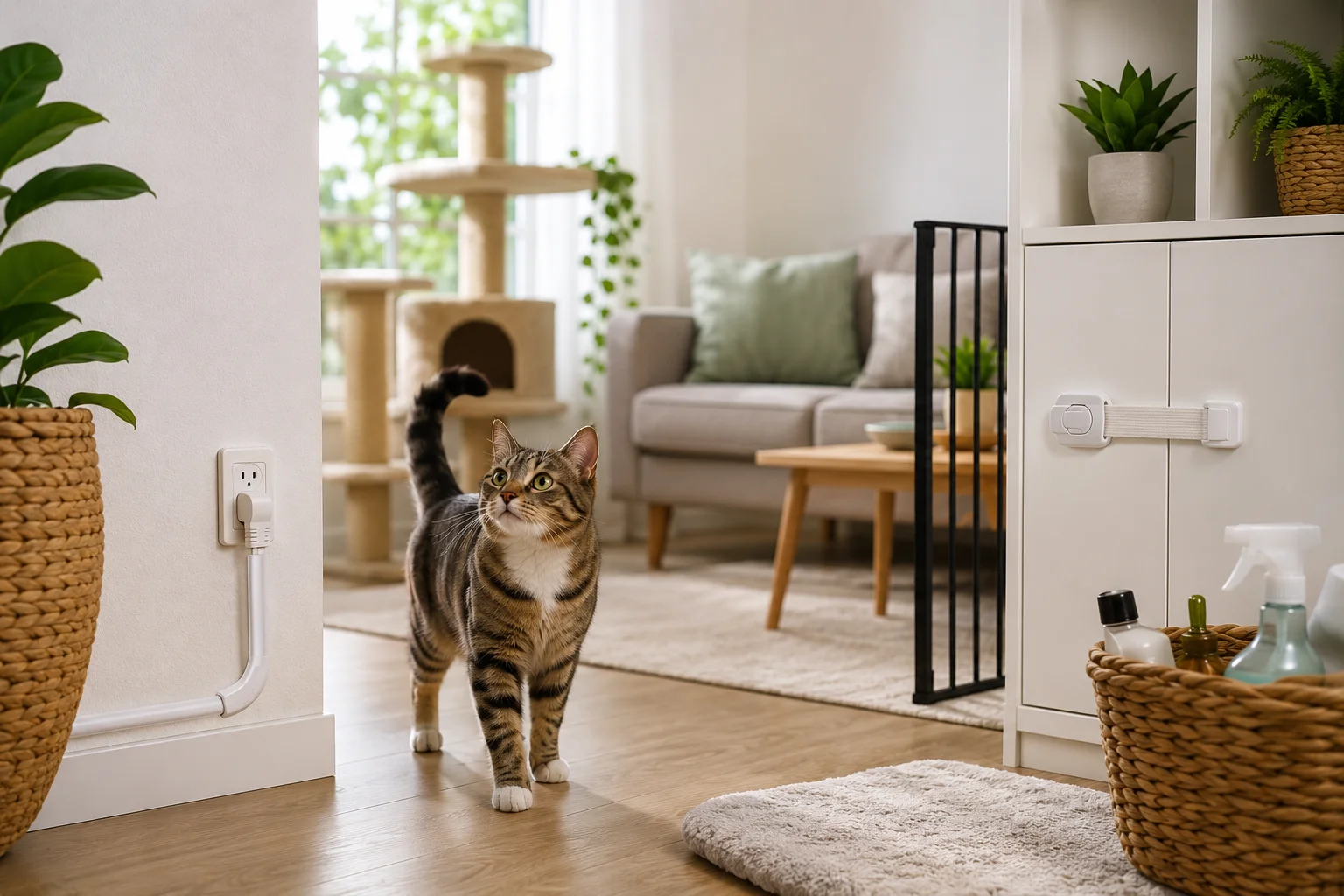
Introduction.
Bringing a cat into your home adds joy, comfort, and companionship—but it also comes with responsibility. Cats are naturally curious, agile, and sometimes surprisingly mischievous, which means even a safe-looking home can hide unexpected dangers. That’s why cat-proofing your home is essential for every pet owner who wants to create a secure and stress-free environment.
In this guide, “Cat-Proof Your Home: The Complete Safety Guide,” you’ll learn practical and easy-to-follow steps to protect your cat from common household hazards. From securing electrical cords and toxic plants to making kitchens, balconies, and small spaces safer, this guide covers everything you need to know.
Whether you’re a first-time cat parent or an experienced pet lover, this complete safety guide will help you transform your home into a cat-friendly space where your furry friend can explore, play, and relax without risk.
Table of contents.
🐱 Why Every Cat Owner Should Cat-Proof Their Home.
🐱 Hidden Household Dangers That Can Harm Cats.
🐱 How to Protect Cats From Electrical Cords.
🐱 Toxic Plants Every Cat Owner Should Remove.
🐱 Safe Storage for Chemicals and Medications.
🐱 Window and Balcony Safety Essentials.
🐱 Kitchen Hazards Most Cat Owners Overlook.
🐱 Creating a Safe and Happy Indoor Environment.
🐱 Must-Have Products for Cat-Proofing.
🐱 My Personal Experience Cat-Proofing My Home.
🐱 Helpful Resources for Responsible Cat Owners.
🐱 Frequently Asked Questions.
🐱 Final Thoughts.
Why Every Cat Owner Should Cat-Proof Their Home.
Cats are incredibly smart, but they don’t understand danger the way humans do. A dangling cord looks like a toy. An open window seems like an exciting adventure. A toxic plant can appear just as appealing as cat grass.
Cat-proofing isn’t about limiting your pet’s freedom. It’s about creating an environment where they can safely explore, play, climb, and relax without putting themselves at risk.
Some benefits of cat-proofing include:
- Fewer accidents and injuries
- Reduced risk of poisoning
- Less property damage
- Lower emergency veterinary costs
- Greater peace of mind for pet owners
Think of it as preparing your home from your cat’s perspective.
Hidden Household Dangers That Can Harm Cats.
Many common household items can become serious hazards for curious cats.
Some of the most common dangers include:
- Electrical cords
- Toxic houseplants
- Open windows
- Plastic bags
- String and ribbon
- Human medications
- Cleaning products
- Small objects that can be swallowed
- Hot stoves and ovens
A quick walk through your home can help you identify and remove many of these risks before they become a problem.
How to Protect Cats From Electrical Cords.
One of the first things I noticed after adopting my cat was how fascinated she was by charging cables.
Cats often chew on cords because they’re flexible, move easily, and sometimes feel interesting on their teeth. Unfortunately, electrical wires can cause severe burns and even electrocution.
Here are a few simple solutions:
- Use cord covers or cable protectors.
- Hide wires behind furniture whenever possible.
- Unplug unused devices.
- Keep chargers stored away when not in use.
- Offer safe chew toys as alternatives.
These small changes can make a huge difference.
Toxic Plants Every Cat Owner Should Remove.
Many beautiful houseplants can be dangerous for cats.
Some of the most harmful include:
- Lilies
- Sago Palm
- Peace Lily
- Philodendron
- Pothos
- Aloe Vera
If you enjoy keeping plants indoors, consider safer alternatives such as:
- Spider Plant
- Boston Fern
- Areca Palm
- Cat Grass
- Calathea
When in doubt, always research a plant before bringing it home.
Safe Storage for Chemicals and Medications.
Cats can access places that surprise even experienced pet owners.
Keep the following items securely stored:
- Cleaning sprays
- Laundry detergent
- Bleach
- Insecticides
- Vitamins
- Prescription medications
- Essential oils
A locked cabinet is one of the easiest ways to prevent accidental poisoning.
Window and Balcony Safety Essentials.
Many people assume indoor cats won’t try to escape. In reality, even calm cats may chase birds, insects, or outdoor sounds.
To improve indoor cat safety:
- Install sturdy window screens.
- Check screens regularly for damage.
- Add protective balcony netting.
- Avoid leaving windows fully open.
- Make sure doors close securely.
Falls and escapes happen more often than many owners realize.
Kitchen Hazards Most Cat Owners Overlook.
The kitchen is one of the busiest rooms in the house—and one of the most dangerous for pets.
Keep cats away from:
- Hot stovetops
- Sharp utensils
- Open flames
- Chocolate
- Grapes
- Raisins
- Garlic
- Onions
- Alcohol
Getting into the habit of cleaning counters and storing food immediately can prevent many accidents.
Creating a Safe and Happy Indoor Environment.
A safe home isn’t just about removing dangers. It’s also about giving your cat healthy ways to express natural behaviors.
Consider adding:
- Cat trees
- Scratching posts
- Window perches
- Puzzle feeders
- Interactive toys
- Comfortable sleeping areas
A mentally stimulated cat is usually happier, healthier, and less likely to get into trouble.
Must-Have Products for Cat-Proofing.
The following products can make your home significantly safer:
Cord Protectors.
Help prevent dangerous chewing accidents.
Cabinet Safety Locks.
Keep chemicals and medications out of reach.
Heavy-Duty Window Screens.
Provide extra protection against falls.
Covered Trash Cans.
Stop curious cats from accessing harmful waste.
Cat Trees.
Offer safe climbing opportunities.
Pet Gates.
Restrict access to unsafe rooms when needed.
My Personal Experience Cat-Proofing My Home.
When I first adopted my cat, I underestimated just how determined a curious feline can be.
Within the first few days, she managed to climb onto shelves, investigate every corner of the kitchen, and chew on a charging cable. Thankfully, nothing serious happened, but it was enough to convince me that I needed to make some changes.
I started by removing toxic plants, organizing loose wires, and installing stronger window screens. I also added a tall cat tree near a sunny window so she had a safe place to climb and observe the outdoors.
The transformation was remarkable. Instead of searching for trouble, she spent more time playing, relaxing, and using the spaces designed specifically for her.
That experience taught me that cat-proofing isn’t about restricting a cat’s freedom—it’s about guiding that curiosity toward safer choices.
Helpful Resources for Cat Owners.
ASPCA Cat Care Guide.
https://www.aspca.org/pet-care/cat-care
PetMD Cat Health Center.
Humane Society Cat Care Resources.
https://www.humanesociety.org/resources/cat-care
International Cat Care.
Frequently Asked Questions.
❓ How do I start cat-proofing my home?
- Begin by removing toxic plants, securing electrical cords, and storing chemicals safely.
❓ Are indoor cats really safer than outdoor cats?
- In most cases, yes. Indoor cats face fewer dangers such as traffic, predators, and diseases.
❓ What plants are most dangerous for cats?
- Lilies, Sago Palm, Pothos, and Philodendron are among the most toxic.
❓ How can I stop my cat from chewing cords?
- Use cord covers and provide safe chew toys as alternatives.
❓ Should I cat-proof my home even if my cat is older?
- Absolutely. Cats of all ages can encounter household hazards.
❓ Is a balcony safe for cats?
- Only if it has proper safety netting or protective barriers.
❓ How often should I inspect my home for hazards?
- A monthly safety check is a good habit for every cat owner.
❓ What’s the most overlooked danger in a cat-proof house?
- Open windows and unsecured screens are often underestimated by pet owners.
Final thoughts.
Creating a safe home for your cat doesn’t have to be complicated or expensive. Most accidents can be prevented with a few thoughtful adjustments and regular safety checks.
By taking the time to remove hazards, secure dangerous areas, and provide enriching alternatives, you’re giving your cat the freedom to explore safely while protecting them from unnecessary risks.
At the end of the day, the goal of cat-proofing your home is simple: helping your feline companion enjoy a safer, healthier, and happier life by your side.


