
How to Create a Safe and Stress-Free Home for Indoor Cats.
Discover simple and practical ways to create a safe and stress-free home for indoor cats. Learn how to improve your cat’s comfort, reduce anxiety, encourage healthy behavior, and build the perfect indoor environment for a happy and healthy feline companion.
Introduction.
Creating a safe and stress-free home for indoor cats is one of the most important parts of responsible pet care. Indoor cats spend their whole lives inside the home, so their environment directly affects their mood, behavior, and health.
A cat may have good food and a warm place to sleep, but that alone is not enough. Cats also need comfort, mental activity, quiet spaces, and daily routines to feel secure.
Many indoor cats suffer from boredom without their owners realizing it. Some cats stop playing, scratch furniture, hide more often, or become aggressive because they feel anxious or unstimulated.
The good news is that small changes inside the home can improve a cat’s life in a big way.
This guide will help you understand how to build a peaceful indoor environment where your cat feels relaxed, active, and emotionally balanced. You will also discover helpful products, trusted resources, personal tips, and answers to common questions cat owners often search for online.
Inside Article.
1.Why Indoor Cats Need a Calm Environment.
2.How to Create a Safe and Stress-Free Home for Indoor Cats.
3.Remove Hidden Dangers Inside the Home.
4.Create Comfortable Resting Areas.
5.Why Cats Need Vertical Space.
6.Litter Box Tips for a Cleaner and Happier Cat.
7.Daily Play and Mental Enrichment.
8.Building a Healthy Routine for Indoor Cats.
9.Best Toys for Indoor Cats.
10.Food and Water Tips for Better Health.
11.Ways to Reduce Stress and Anxiety.
12.Introducing Visitors and Other Pets.
13.Important Products for Indoor Cats.
14.Helpful Resources for Cat Owners.
15.My Personal Experience With Indoor Cats.
16.Frequently Asked Questions.
17.Conclusion.
Why Indoor Cats Need a Calm Environment.
Indoor cats rely completely on their surroundings. Unlike outdoor cats, they cannot explore large spaces or escape stressful situations easily. Because of this, the home itself becomes their entire world.
A noisy or uncomfortable environment can lead to stress. Over time, stress may affect both behavior and health. Some cats become withdrawn while others become destructive or overly active.
Common signs of stress in indoor cats include:
- Hiding frequently.
- Scratching furniture excessively.
- Refusing foodSleeping too much.
- Aggressive behavior
- Over-grooming.
Creating a safe and stress-free home for indoor cats helps prevent these problems before they become serious.
How to Create a Safe and Stress-Free Home for Indoor Cats.
A calm environment starts with understanding natural cat behavior. Cats enjoy routine, privacy, climbing, and play. When these needs are met, they usually become happier and more confident.
Keep Feeding.
Times ConsistentCats feel more secure when they eat at the same time every day. Sudden schedule changes can make some cats anxious.
Give Your Cat Quiet Areas.
Every cat needs peaceful places where they can rest without disturbance. A soft bed in a quiet room works well.
Avoid Too Much Noise
Loud music, yelling, or constant activity can create stress for indoor cats. Try to maintain a calm atmosphere.
Allow Safe Window Viewing.
Cats enjoy watching birds, sunlight, and outdoor movement. Window perches help reduce boredom naturally.
Respect Their Mood.
Sometimes cats want attention, and sometimes they prefer space. Allow your cat to approach you on their own terms.
Remove Hidden Dangers Inside the Home.
Many everyday household items can be dangerous for cats.
Toxic Plants.
Some common plants are unsafe for cats, including:
- Lilies
- Snake plants
- Aloe vera
- Tulips
Always check whether a plant is pet friendly before bringing it home.
Electrical Cords.
Cats may chew wires out of curiosity. Use cable covers to protect them.
Cleaning Products.
Store sprays, detergents, and chemicals in closed cabinets away from pets.
Open Windows and Balconies.
Install secure screens to prevent accidental falls.
Small Household Items.
Hair ties, rubber bands, and strings may seem harmless but can cause serious stomach problems if swallowed.
Create Comfortable Resting Areas.
Cats sleep many hours every day, so comfortable resting spots are very important.
A relaxing cat space should include:
- A soft blanket or bed
- Quiet surroundings
- Warm temperatures
- Easy access to water
- Nearby hiding spots
Some cats prefer enclosed beds while others enjoy open spaces near family activity.
Watch where your cat naturally likes to sleep and improve that area for extra comfort.
Why Cats Need Vertical Space.
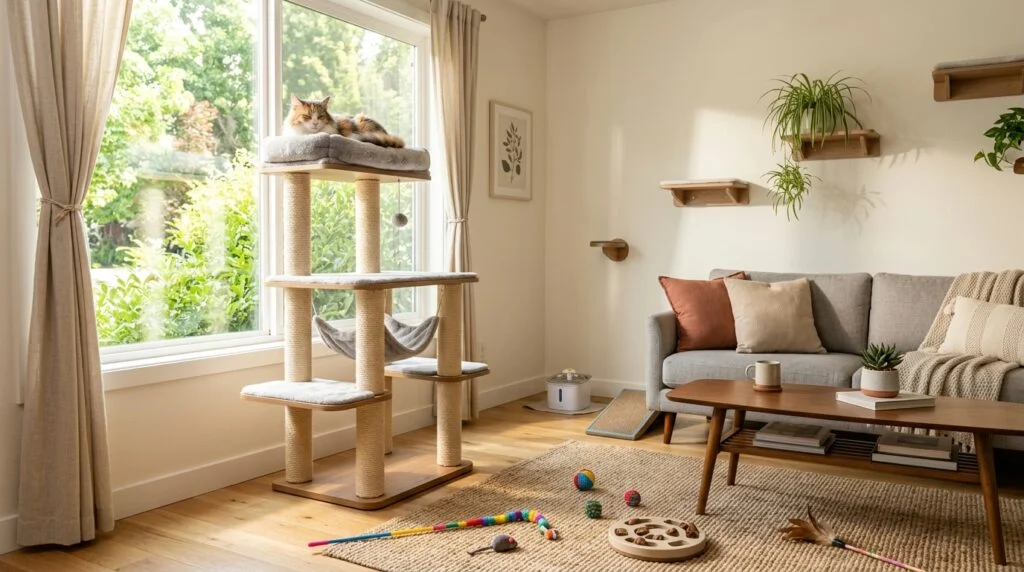
Climbing is natural behavior for cats. Vertical areas help them feel secure because they can observe their surroundings from above.
Good vertical spaces include:
- Cat trees
- Wall shelves
- Window hammocks
- Tall furniture with safe access
Vertical space is especially important in homes with multiple cats because it reduces competition and tension.
Cats often feel calmer when they have high resting places.
Litter Box Tips for a Cleaner and Happier Cat.
Litter box problems are one of the biggest causes of stress for indoor cats.
Choose Quiet Locations.
Avoid placing litter boxes near loud appliances like washing machines.
Clean the Box Daily.
Cats dislike dirty litter. Scoop waste every day to keep the area fresh.
Use Enough Litter Boxes.
Experts often recommend one litter box per cat plus one extra.
Avoid Strong Scents.
Heavy perfume smells may discourage cats from using the box comfortably.
Daily Play and Mental Enrichment.
Mental stimulation is a major part of creating a safe and stress-free home for indoor cats.
Without enrichment, many cats become bored and inactive.
Fun Indoor Activities.
- Feather wand games
- Treat puzzles
- Cardboard boxes
- Cat tunnels
- Ball toys
- Hide-and-seek treats
Interactive play strengthens the bond between cats and owners while reducing anxiety.
Even short daily play sessions can improve mood and health.
Building a Healthy Routine for Indoor Cats.
Cats feel safer when daily life stays predictable.
Here is a simple routine idea:
Time. Activity.
Morning. Feeding and short playtime.
Afternoon. Quiet nap time.
Evening. Interactive exercise.
Night. Calm feeding and relaxation.
Routine helps reduce fear and supports emotional stability.
Best Toys for Indoor Cats.
Different cats enjoy different kinds of toys.
Interactive Wand Toys.
These toys encourage jumping and chasing.
Puzzle Feeders.
Puzzle toys keep cats mentally active while slowing down eating.
Scratching Posts.
Scratching helps cats release stress naturally.
Catnip Toys.
Some cats become playful and relaxed with catnip products.
Rotate toys regularly so your cat stays interested.
Food and Water Tips for Better Health.
Healthy nutrition supports both physical and emotional well-being.
Choose Quality Food.
Cats need protein-rich diets designed for their age and activity level.
Encourage Water Drinking.
Many indoor cats do not drink enough water.
Helpful tips include:
- Using water fountains
- Placing bowls in different rooms
- Cleaning bowls often
- Offering wet food occasionally
Good hydration supports kidney and urinary health.
Ways to Reduce Stress and Anxiety.
Indoor cats can become stressed by sudden changes.
Common Stress Triggers.
- Loud noises
- New furniture
- Visitors
- Moving homes
- New pets
Helpful Stress Reduction Tips.
- Keep routines stable
- Create hiding spots
- Use calming pheromone diffusers
- Give extra playtime during stressful events.
A calm environment helps cats feel emotionally secure.
Introducing Visitors and Other Pets.
Cats usually need time to adjust to changes.
New Pet Introductions.
Slow introductions work best.
- Keep pets separated at first
- Allow scent swapping
- Use supervised meetings
- Reward calm behavior
Visitors at Home.
Some cats are social while others prefer hiding.
Never force a nervous cat to interact with guests.
Important Products for Indoor Cats.
Multi-Level Cat Tree.
https://www.chewy.com/frisco-72-in-faux-fur-cat-tree-condo/dp/190450
Interactive Wand Toy.
https://www.amazon.com/dp/B000256CG4
Pet Water Fountain.
https://www.petlibro.com/products/capsule-cat-water-fountain
Puzzle Feeder for Cats.
https://www.chewy.com/catit-senses-20-food-tree-cat-toy/dp/178225
Durable Scratching Post.
https://www.amazon.com/dp/B00MNXQ5U8
Cat Calming Diffuser.
Helpful Resources for Cat Owners.
1.https://www.aspca.org/pet-care/cat-care
3.https://www.vet.cornell.edu/departments-centers-and-institutes/cornell-feline-health-center
My Personal Experience With Indoor Cats.
When I adopted my first indoor cat, I believed that food, water, and a bed were enough. After some time, I noticed she spent more hours hiding and scratching random furniture around the house.
I started learning more about indoor cat behavior and realized she needed mental stimulation and safer resting areas. I added a cat tree near the window, placed cardboard boxes in quiet corners, and spent more time playing with her daily.
The difference was noticeable within weeks. She became more relaxed, playful, and affectionate. Her scratching behavior also improved after adding proper scratching posts.
One of the biggest lessons I learned was that indoor cats need emotional comfort just as much as physical care.
Frequently Asked Questions.
Are indoor cats happier than outdoor cats?
Indoor cats can live very happy lives when they receive proper care, enrichment, and attention.
How do I know if my indoor cat feels stressed?
Common signs include hiding, loss of appetite, excessive grooming, and unusual aggression.
What helps reduce boredom in indoor cats?
Interactive toys, climbing spaces, puzzle feeders, and daily play sessions help greatly.
How often should I play with my cat?
Most cats benefit from at least 15 to 20 minutes of active play every day.
Do indoor cats need scratching posts?
Yes, scratching is natural behavior that helps cats stretch, mark territory, and reduce stress.
Why does my cat hide from visitors?
Many cats feel nervous around unfamiliar people. Quiet hiding spaces help them feel safe.
Is a water fountain good for cats?
Yes, many cats drink more water from fountains because moving water attracts them naturally.
Conclusion.
Learning how to create a safe and stress-free home for indoor cats can improve your pet’s quality of life in many ways. A peaceful home helps cats feel secure, active, and emotionally healthy.
Simple improvements like quiet resting spots, climbing spaces, regular playtime, and clean litter boxes can make a huge difference. Indoor cats depend fully on their environment, so every small effort matters.
When cats feel comfortable inside the home, they often become more loving, playful, and confident. Building a calm indoor environment is not only good for your cat’s health but also strengthens the bond you share every day.
Author.
Jibran Abbas.


One Comment