
Hidden Signs Your Cat May Be Stressed or Anxious and How to Help.
Cats often hide their emotions, making stress and anxiety difficult to spot. Learn the hidden signs your cat may be stressed or anxious, what causes feline stress, and practical ways to help your pet feel more comfortable and secure.
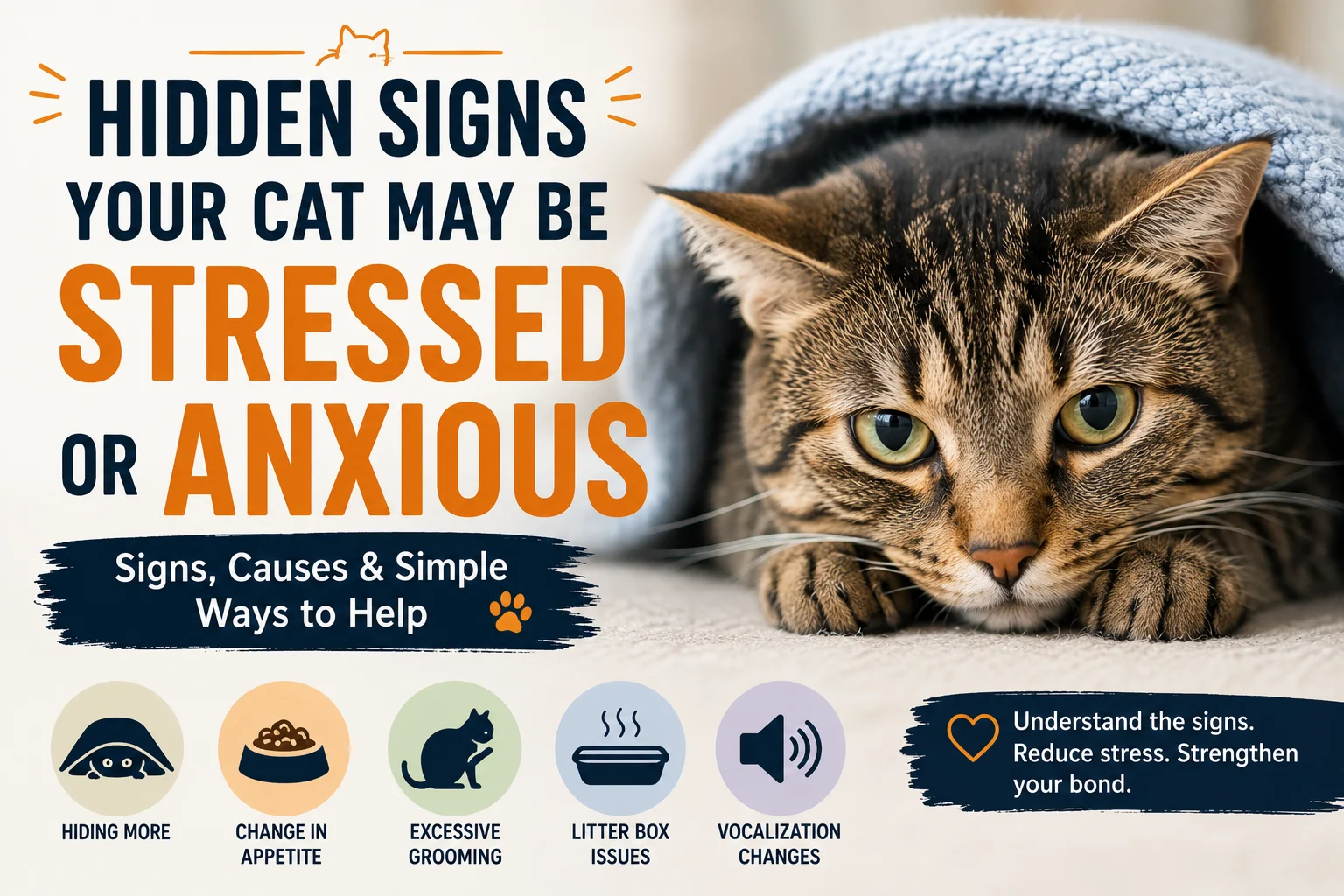
Introduction.
Cats are masters at hiding discomfort, which is why many pet owners fail to notice when their feline companion is struggling emotionally. Hidden signs your cat may be stressed or anxious can be subtle and easy to overlook, ranging from changes in grooming habits to unusual sleeping patterns or reduced social interaction.
While occasional stress is a normal part of life, ongoing anxiety can affect your cat’s physical health, behavior, and overall well-being. Learning to recognize these early warning signs can help you identify potential problems before they become more serious.
In this guide, we’ll explore the hidden signs your cat may be stressed or anxious and explain how understanding these behaviors can help you create a calmer, happier environment for your pet.
Table of contents.
1.Hidden Signs Your Cat May Be Stressed or Anxious.
2.Common Causes of Stress and Anxiety in Cats.
3.How to Help a Stressed or Anxious Cat.
4.My Personal Experience With a Stressed Cat.
5.Recommended Products and Natural Resources.
6.Frequently Asked Questions (FAQs).
7.Conclusion.
Hidden Signs Your Cat May Be Stressed or Anxious.
Many cat owners assume their pet is fine as long as it is eating and sleeping normally. However, hidden signs your cat may be stressed or anxious are often difficult to notice. Cats naturally hide discomfort, making it important to pay attention to small changes in behavior. A stressed cat may spend more time hiding, avoid family members, groom excessively, or become unusually quiet. Some cats may suddenly become more vocal or show signs of aggression.
Changes in appetite can also be an early warning sign. Your cat may eat less, drink more water, or lose interest in favorite activities. Even subtle body language, such as flattened ears, a tucked tail, or dilated pupils, can indicate anxiety. Recognizing these hidden signs your cat may be stressed or anxious can help you take action before stress affects your cat’s overall health and happiness.
Common Causes of Stress and Anxiety in Cats.
Cats love routine and familiarity. Any major change in their environment can trigger stress. Common causes include moving to a new home, introducing a new pet, loud noises, home renovations, or changes in daily schedules. Even small changes, such as moving furniture or changing the location of the litter box, may make some cats uncomfortable.
Lack of mental stimulation is another common reason for anxiety. Indoor cats especially need opportunities to play, climb, and explore. When these needs are not met, stress-related behaviors may develop. Understanding the common causes behind hidden signs your cat may be stressed or anxious can help you identify and remove potential triggers before they become serious problems.
How to Help a Stressed or Anxious Cat.
Helping a stressed cat starts with creating a safe and predictable environment. Keep feeding times consistent and provide quiet spaces where your cat can relax without interruption. Interactive toys, scratching posts, and climbing trees can help reduce boredom and provide healthy outlets for energy.
Spend quality time with your cat through gentle play sessions and positive interaction. Avoid forcing contact if your cat prefers space. In some cases, calming products or natural remedies may provide additional support.
Most importantly, monitor your cat’s behavior closely and consult a veterinarian if symptoms persist. By understanding hidden signs your cat may be stressed or anxious, you can take simple steps to help your feline companion feel secure, comfortable, and happy.
My personal experience.
I once noticed my cat spending more time under the bed and avoiding family activities. At first, I thought it was normal behavior, but I later realized these were signs of stress. After creating a quieter environment and adding more playtime, my cat gradually became more relaxed and social. This experience taught me how important it is to notice small behavioral changes early.
Recommended Products and Natural Resources.
I once noticed my cat spending more time under the bed and avoiding family activities. At first, I thought it was normal behavior, but I later realized these were signs of stress. After creating a quieter environment and adding more playtime, my cat gradually became more relaxed and social. This experience taught me how important it is to notice small behavioral changes early.
Nautral resourses.
For the Natural Resources and Remedies for Cat Anxiety section, you can use these simple natural resources:
- Cat Grass
- Window Perch for Bird Watching
- Interactive Play Sessions
- Safe Hiding Spots
- Catnip (for cats that respond positively)
https://www.aspca.org/pet-care/cat-care.
https://vcahospitals.com/know-your-pet/stress-in-cats
Frequently Asked Questions FAQs.
1.Can cats hide stress?
Yes, cats often hide their stress, making behavioral changes the easiest way to identify a problem.
2.What is the most common sign of anxiety in cats?
Hiding, excessive grooming, and changes in appetite are among the most common signs.
3.Can stress make a cat sick?
Long-term stress may affect both physical and emotional health if left untreated.
Conclusion.
Understanding hidden signs your cat may be stressed or anxious is essential for every cat owner. Small changes in behavior can reveal important clues about your pet’s emotional health.
By identifying stress triggers, providing a comfortable environment, and responding early, you can help your cat feel safer and more relaxed.
A happy and stress-free cat is more likely to enjoy a healthy, active, and fulfilling life. Paying attention to your cat’s needs today can make a big difference in its well-being for years to come.


One Comment