
The Complete Beginner’s Guide to Raising a Healthy Indoor Cat.
Learn the complete beginner-friendly guide to raising a healthy indoor cat. Discover simple tips about food, grooming, litter training, hydration, playtime, and daily care to keep your cat happy and healthy indoors.
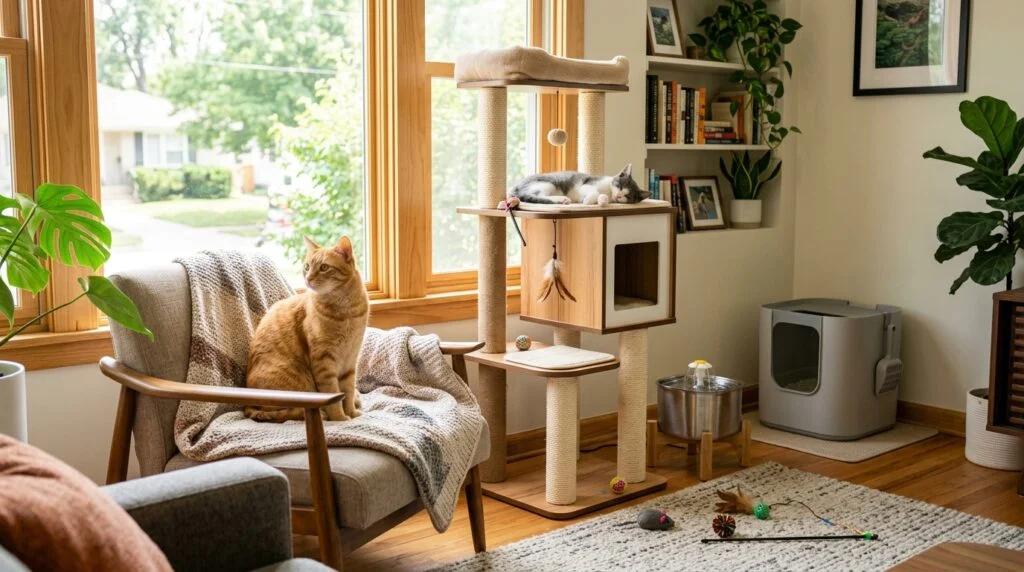
Introduction.
Raising a healthy indoor cat is one of the best ways to give your pet a safe, happy, and long life. A healthy indoor cat needs proper food, clean water, daily playtime, grooming, and regular care to stay active and comfortable at home.
Many beginners think indoor cats are easy to manage, but a healthy indoor cat still needs attention, exercise, and a clean environment every day.
In this beginner-friendly guide, you will learn simple and easy tips to help your healthy indoor cat live a better and healthier life indoors.
Table of contents.
1.Why Indoor Cats Live Longer.
2.Preparing Your Home for a Cat.
3.Choosing the Right Cat Food.
4.Water and Hydration Tips.
5.Best Litter Box Habits.
6.Daily Exercise and Playtime.
7.Grooming and Cleaning.
8.Regular Vet Checkups.
9.Signs Your Cat May Be Sick.
10.My Personal Experience.
11.Recommended Cat Products.
12.Helpful Resources.
13.FAQs.
14.Conclusion.
1.Why Indoor Cats Live Longer.
Indoor cats are usually safer and healthier than outdoor cats. They are protected from:
•Traffic accidents.
•Dangerous animals.
•Diseases.
•Bad weather.
•Toxic food or water.
Most indoor cats also experience less stress because they live in a safe environment.
According to https://www.aspca.org/ indoor cats often live much longer than outdoor cats when they receive proper care.
2.Preparing Your Home for a Cat.
Before bringing your cat home, make sure your space is safe and comfortable.
Things Every Indoor Cat Needs.
•A soft bed.
•Food and water bowls.
•A litter box.
•Cat toys.
•A scratching post.
•Safe hiding spots.
Cats love quiet and peaceful places. Try to create a small area where your cat can relax without noise.
Smart Cat Owner Advice.
Place the litter box away from food and water bowls. Cats do not like eating near their toilet area.
3.Choosing the Right Cat Food.
Food is one of the biggest parts of your cat’s health.
Choose cat food that contains:
•Real meat protein.
•Healthy fats.
•Vitamins and minerals.
•Taurine for heart and eye health.
Avoid foods with too many artificial colors or fillers.
Wet Food vs Dry Food.
Wet Food.
•Helps with hydration.
•Easier to eat.
•Great for urinary health.
Dry Food.
•Easy to store.
•Budget-friendly.
•Good for dental support.
Most vets recommend using both in balance.
You can also learn more about cat nutrition from https://www.petmd.com/cat/nutrition.
4.Water and Hydration Tips.
Many cats do not drink enough water. This can lead to kidney or urinary problems.
Easy Ways to Help Your Cat Drink More.
•Use a clean water bowl daily.
•Try a cat water fountain.
•Add wet food to meals.
•Place water bowls in different rooms.
Smart Cat Owner Advice.
Cats usually drink more water when it is moving. A pet fountain can help a lot.
5.Best Litter Box Habits.
A clean litter box is very important for indoor cats.
Beginner Tips.
•Scoop waste every day
•Deep clean weekly
•Use unscented litter if possible
•Keep one litter box per cat.
If the litter box is dirty, cats may stop using it.
6.Daily Exercise and Playtime.
Indoor cats need exercise to stay healthy and avoid weight gain.
Fun Activities for Indoor Cats.
•Feather toys.
•Laser play.
•Climbing trees.
•Puzzle feeders
•Ball toys.
Spend at least 15–20 minutes daily playing with your cat.
Smart Cat owner Advice.
Rotate toys every few days so your cat does not get bored.
7.Grooming & Cleaning.
Even short-haired cats need grooming.
Basic Grooming Routine.
•Brush fur weekly.
•Trim nails carefully.
•Clean food bowls daily.
•Wash bedding regularly.
Long-haired cats may need more brushing to avoid hair mats.
For safe grooming advice, visit https://www.humanesociety.org/resources/grooming-your-cat.
8.Regular Vet Checkups.
Many health problems are hard to notice early.
Take your cat for:
•Vaccinations.
•Annual checkups.
•Dental checks.
•Parasite prevention.
Smart Cat owner Advice.
Keep a small notebook or phone record for your cat’s weight, eating habits, and behavior changes.
9.Signs Your Cat May Be Sick.
Watch for these warning signs:
•Not eating.
•Sleeping too much.
•Vomiting often.
•Weight loss.
•Breathing problems.
•Hiding more than usual.
If you notice these signs, contact a vet quickly.
10.MyPersonalExperience.
When I first raised an indoor cat, I thought food and a litter box were enough. But I later learned that cats also need attention, playtime, and a peaceful environment.
One thing that helped the most was creating a daily routine. Feeding at the same time, cleaning the litter box regularly, and playing every evening made my cat calmer and healthier.
I also noticed that adding a water fountain increased my cat’s water intake almost immediately. Small changes can make a very big difference.
11.Recommended Cat Products.
These beginner-friendly products can make indoor cat care easier and better.
1.Cat Water Fountain.

Great for helping cats drink more water.
https://www.chewy.com/catit-flower-plastic-cat-fountain/dp/178052
2.Interactive Cat Toy.

Helps indoor cats stay active and entertained.
Search for:(“Interactive feather cat toy“).
3.Scratching Post.

Protects furniture and supports healthy claws.
https://www.chewy.com/frisco-335-in-sisal-cat-scratching/dp/190454
4.Automatic Cat Feeder.

Helpful for busy cat owners.
Search for: (“Automatic cat feeder for indoor cats”).
12.Helpful Resources.
These trusted websites offer more cat care inform
13.FAQs.
Q1: How often should I feed an indoor cat?
Most adult indoor cats eat 2 times daily. Kittens need more frequent meals.
Q2:Can indoor cats live happily without going outside?
Yes. Indoor cats can live very happy lives if they get enough playtime, climbing space, and attention.
Q3:What is the best litter for indoor cats?
Unscented clumping litter is a popular and beginner-friendly choice.
Q4:How often should I take my cat to the vet?
Healthy adult cats should visit the vet at least once a year.
Q5:Do indoor cats need baths?
Most cats clean themselves well. Baths are only needed sometimes, especially if the cat gets dirty or has medical issues.
Q6:What are the best toys for indoor cats?
Interactive toys, feather wands, puzzle feeders, and climbing trees are excellent choices.
14.Conclusion.
Raising a healthy indoor cat is all about care, patience, and daily habits. Your cat does not need a perfect home. They simply need love, safety, healthy food, clean water, and your attention.
Start with the basics, create a simple routine, and learn your cat’s personality over time. Small efforts every day can help your cat live a healthier and happier life for many years.
If you follow the tips in this guide, you will already be ahead of many beginner cat owners.
Author.
Jibran Abbas.
Disclimar.
The information in this article is for educational purposes only and is not a substitute for professional veterinary advice. Always consult a licensed veterinarian for medical concerns, diet changes, or health problems related to your cat.


2 Comments