

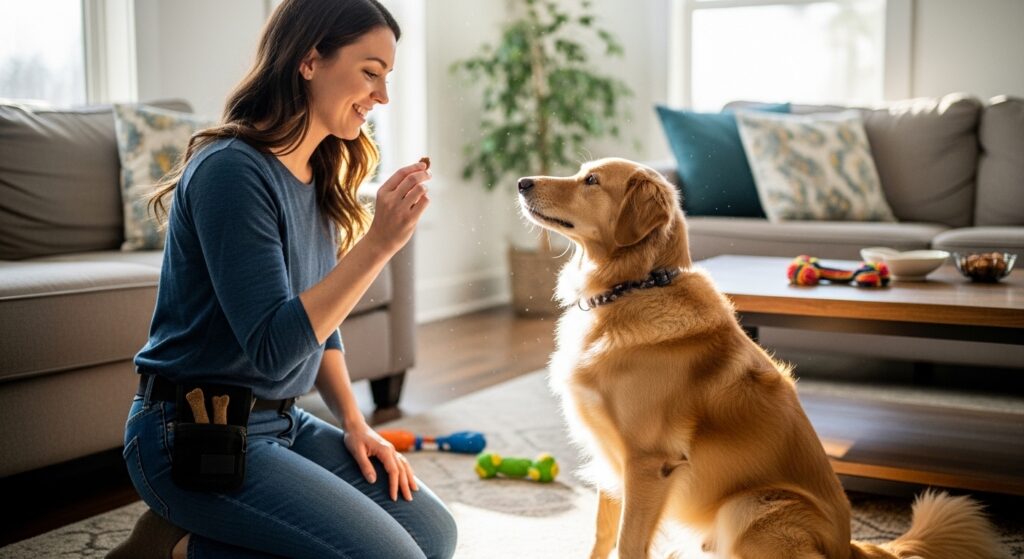
Introduction.
Dog training is the most important aspect of proper pet care.
In case you are wondering about how you could train your pet dog without breaking your back financially, with proper training strategies and techniques, you can do just that from the comfort of your own home.
Properly trained dogs are happier and more obedient than those that have not been trained.
This is because dog training leads to improved communication and creates a stronger bond between the pet and its owner.
In this guide, you will learn the best training strategies that really work for beginners.
Inside the Article ?
1.Why Dog Training is Important
2.Basic Principles of Training
3.Step-by-Step Dog TrainingMethods
4.Essential Commands to Teach
5.Common Training Mistakes
6.Training Schedule
7.Personal Experience
8.Conclusion
9.FAQs
1. Why Dog Training is Important.
Dog training is very important in creating an animal that is safe, happy, and obedient.
This involves training the dog so that it can learn the basics, respect its limits and be able to behave in various situations.
Training helps improve behavior and communication. According to the https://www.akc.org early training plays a key role in a dog’s development.
Otherwise, your dog might end up being destructive as it grows by barking, biting, chewing on the furniture, and other things.
By doing so, dog training helps you communicate effectively with your canine friend, which is also beneficial in many ways.
It will help you build trust and create a stronger relationship. Training will help your dog adjust better in both public and home settings.
This means that you will find life easier with the animal.Moreover, training helps in mentally stimulating your canine friend.
Your dog needs to be physically and mentally active. Proper training ensures that your dog leads a healthier, happier, and more balanced life.
2. Basic Principles of Training.
The training process requires adherence to several basic rules.
Firstly, one should stick to consistency in using specific commands and signs so that the animal will not be confused about what you want from it.
The second rule of training your pet at home includes the use of positive reinforcement, which implies rewarding the dog each time it makes a desirable reaction.
Rewarding helps animals learn much quicker since they connect particular actions with their consequences. Another critical thing to remember during the training process is patience.
One should be patient because dogs need more time to master something new, although all of them have different learning rates.
It is necessary to keep training sessions short and not too complicated to attract a dog’s attention and make it more interested.
It is forbidden to punish your dog or scare it in any way since such measures might lead to its negative attitude to you.
3. Step-by-Step Dog Training Methods.
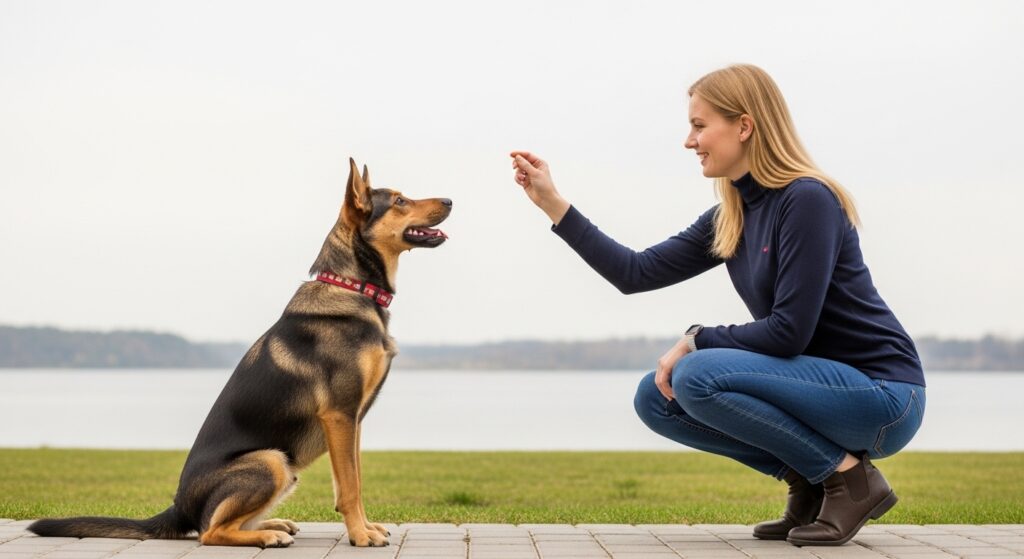
Dog training in the comfort of your own home can be made easier using a step-by-step process.
The first step is to start with easy commands like “sit” and “come.”
After your dog does what you ask it to do, immediately give it a treat as a reward. Only teach one command at a time so that your dog will not get confused with too many instructions at once.
Positive reinforcement works best. Experts at https://www.petmd.com recommend using rewards instead of punishment.
After mastering the command, repeat the process each day to ensure that the habit sticks. Make sure that the training period does not exceed 10 to 15 minutes.
4. Essential Commands to Teach.
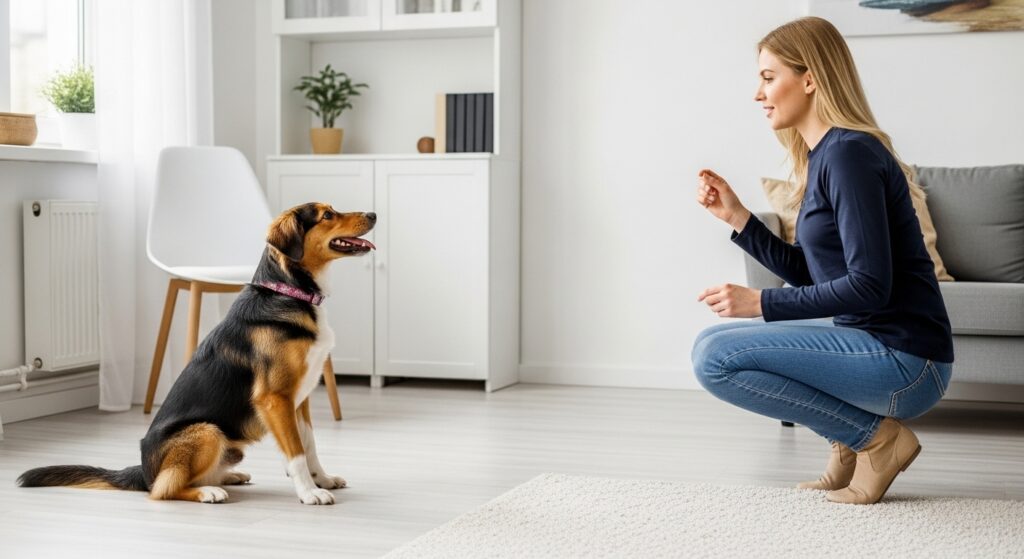
One of the basic lessons that should be taught to dogs is giving them commands.
The first command that you need to teach your dog is the “sit” command.
It is necessary since it will help you in controlling your dog in various situations.
Another essential command that you need to teach your dog is the “stay” command, which will ensure that your dog remains in its position whether you are in a public place or facing any emergency situation.
The third command that you need to teach your dog is the “come” command, which is essential for ensuring that your dog does not leave your sight while you call out for him.
Lastly, you can teach your dog the “leave it” command to prevent your dog from grabbing anything.
5. Common Training Mistakes.
Many dog owners unknowingly make mistakes during training, which can slow progress.
One common mistake is inconsistency—using different commands or allowing certain behaviors sometimes but not others. This confuses the dog and makes learning difficult.
Another mistake is expecting quick results. Training takes time, and impatience can lead to frustration. Long training sessions can also be ineffective, as dogs have short attention spans.
Punishing your dog for mistakes is another major error, as it can create fear and damage trust. Instead, focus on rewarding good behavior.
Some owners also neglect regular practice, which is essential for reinforcing learning. Ignoring your dog’s energy levels or mood can also affect training success.
By avoiding these mistakes and staying consistent, patient, and positive, you can achieve better results and make training a more enjoyable experience for both you and your dog.
6. Training Schedule.
The establishment of a good training program is essential because it will help your dog learn quickly and remain disciplined.
Since dogs are known to adapt easily to schedules, you need to train your dog at set times each day.
For example, you could begin by training the dog in the morning while they are still fresh and ready.
An afternoon training session would incorporate some games, hence making the training process interesting and enjoyable.
At night, you can then review any commands that you have taught your dog.
The duration of each training session must be about 10–15 minutes.
Daily training is essential because it helps your dog to memorize and recall all the commands that you have taught them.
7.💁 Personal Experience.
Initially, when I began to train my dog, Tommy, at home, I did not have the knowledge of how to train effectively.
As an owner, I thought that my pet would quickly understand everything I say and start following my commands.
Unfortunately, this was not the case. He did not pay attention and always wanted to run away or play.
For some time, I experienced frustration, and my training was not productive.
Gradually, I learned that I need to show more tolerance and consistency during the lessons.
Using a treat as a reward, I could train my dog successfully without putting pressure on him.
Additionally, I had to limit each session to fifteen minutes and teach him only one command per day. In time, he responded positively to the commands such as “sit” or “come.”
8. Conclusion.
Training your dog at home is a rewarding experience that benefits both you and your pet.
By following simple methods, staying consistent, and using positive reinforcement, you can teach your dog good behavior and essential commands.
Training improves communication, strengthens your bond, and creates a happier environment for your dog. It also prevents unwanted behaviors and makes daily life easier.
Remember that every dog learns at its own pace, so patience is very important.
Even small progress is a step in the right direction. With regular practice and the right mindset, you can successfully train your dog at home without professional help.
A well-trained dog is not only obedient but also more confident and secure.
In the end, the time and effort you invest in training will lead to a stronger relationship and a better life for your dog.
FAQ Section.
1.How long does it take to train a dog?
Basic training can take a few weeks with daily practice.
2.Can I train my dog without a trainer?
Yes, home training is very effective.
3.What is the best training method?
Positive reinforcement works best.
4.How often should I train my dog?
Daily short sessions are ideal.
5.What if my dog doesn’t listen?
Stay patient and consistent.
Author Bio / Disclaimer.
Author Bio:
Jibran Abbas is a pet care writer helping dog owners improve their pets’ behavior, health, and lifestyle.
Disclaimer:
This article is for informational purposes only. Consult a professional trainer or veterinarian if needed.