
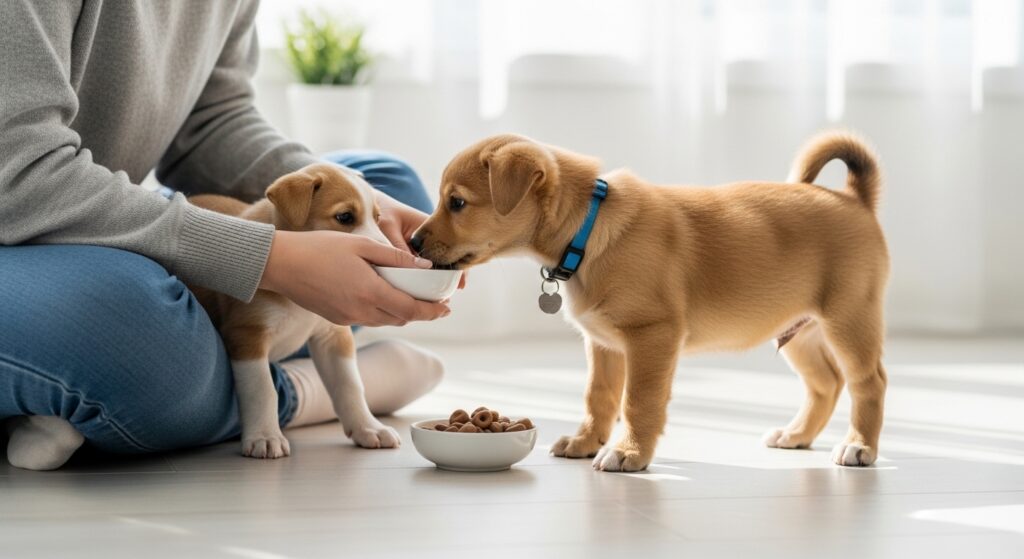

Introduction.

Bringing a new puppy home is an exciting and joyful experience, but it also comes with great responsibility.If you are a first-time pet owner, learning how to take care of a puppy is very important for its healthy growth and happy life.
Puppies need proper feeding, training, grooming, and medical care to develop into strong and well-behaved adult dogs.In the early days, a puppy depends completely on its owner for comfort, food, and safety.
That’s why understanding the basics of puppy care helps you build a strong bond with your pet and avoid common mistakes.
In this complete beginner’s guide, you will learn everything step by step—from feeding schedules to training tips and health care essentials.By following the right methods, you can make sure your puppy grows up healthy, active, and full of love.
What’s inside Article?
1.Understanding Puppy Needs
2.Preparing Your Home
3.Feeding a Puppy Properly
4.Vaccination and Vet Care
5.Training Your Puppy
6.Socialization Skills
7.Grooming and Hygiene
8.Exercise and Playtime
9.Common Health Problems
10.Sleeping Routine
11.Conclusion
12.FAQs
13.Author Bio / Disclaimer
1.Understanding Puppy Needs.
Puppies are just like babies who require nurturing and love.
A puppy relies on its owner for nutrition, comfort, and security.
Emotional bonds and proper training should be instilled early in a dog’s life.
2.Preparing Your Home.
Before bringing a puppy home, make sure your space is safe.
Remove dangerous objects like sharp tools, toxic plants, and small items that can be swallowed.
Arrange a sleeping area with a soft bed, water bowl, and toys.
Feeding Schedule.
Puppies should be fed 3–4 times a day depending on age.
Safe foods.
Use puppy food, boiled chicken, rice, and vet-approved meals.
Avoid Harmful Foods.
Chocolate, onions, garlic, and processed junk food are dangerous for puppies.
3.Feeding a Puppy Properly.
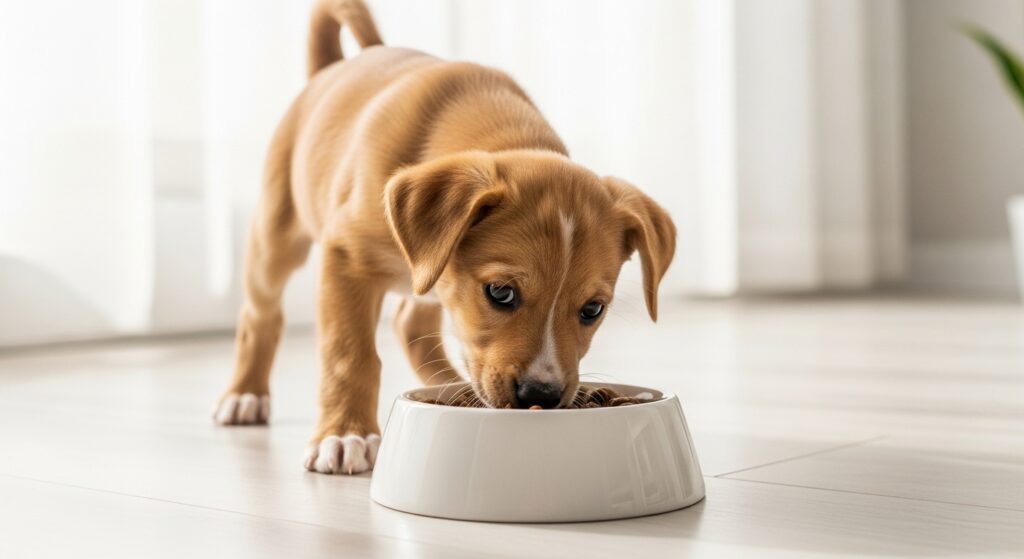
Nutrition forms the backbone of good puppy health. Nutrition aids in growth, healthy bone development, and immunity.
It may be commercial dog food of good quality or home-cooked foods that the veterinarian recommends.
A puppy between two to three months requires soft food since they are still growing their teeth.
With time, you may gradually move to dry food.Always ensure that your puppy has clean water.
Do not overfeed your puppy as this will lead to obesity and other digestive problems.
A balanced diet is very important. Experts at https://www.petmd.com recommend high-quality puppy food for proper growth.
For a complete meal plan, check our http://Dog Diet Plan Guide.
4.Vaccination and Vet Care.
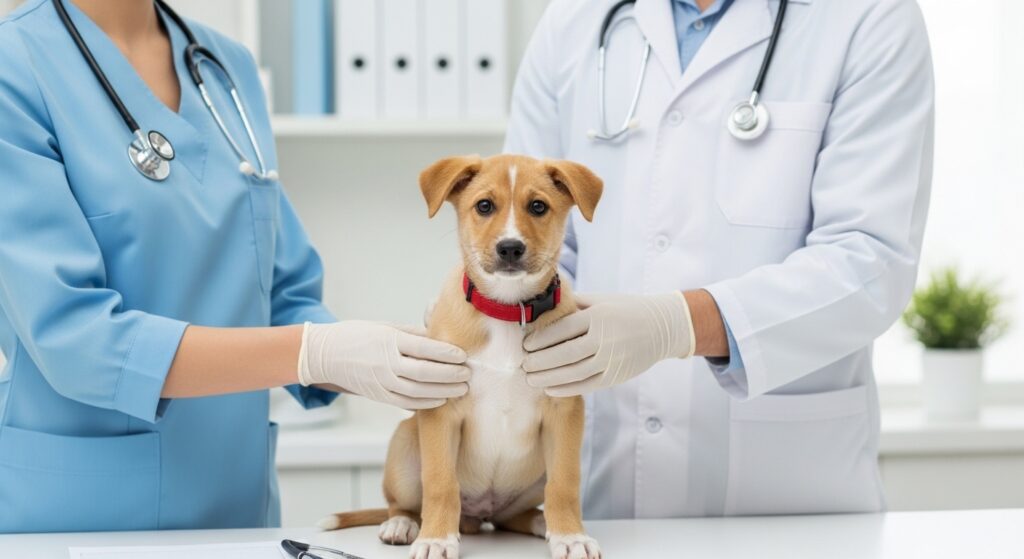
Vaccination is very crucial in ensuring that your puppy does not contract illnesses such as rabies, parvovirus 🦠 and distemper.
Your veterinarian will give you a vaccination chart depending on your puppy’s age.
Routine checkups once in a while assist in identifying any health concerns.
Animal care organizations like https://www.aspca.org suggest creating a safe environment for puppies at home.
Deworming your puppy is also essential in keeping internal parasites away from him.
5.Training Your Puppy.
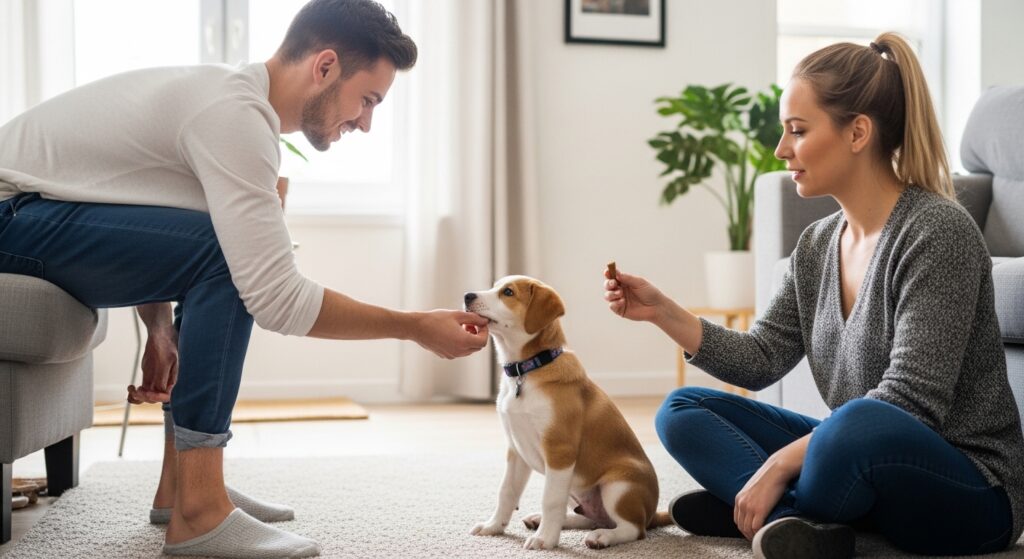
Training should start as early as possible. Puppies learn quickly during their early months.
Basic commands like “sit,” “stay,” and “come” are essential.Use positive reinforcement such as treats and praise.
Avoid shouting or punishment because it can make the puppy fearful.House training is also important.
Take your puppy outside frequently until it learns the correct place to relieve itself.
You can also read our detailed http://Dog Training Tips for Beginners.
6.Socialization Skills.
This is a process that involves introducing the puppy to various people, pets, and environments to avoid future problems such as fear and aggression.
It is important to introduce the puppy gradually to new things such as traveling in the car, meeting strangers, and other dogs.
7.Grooming and Hygiene
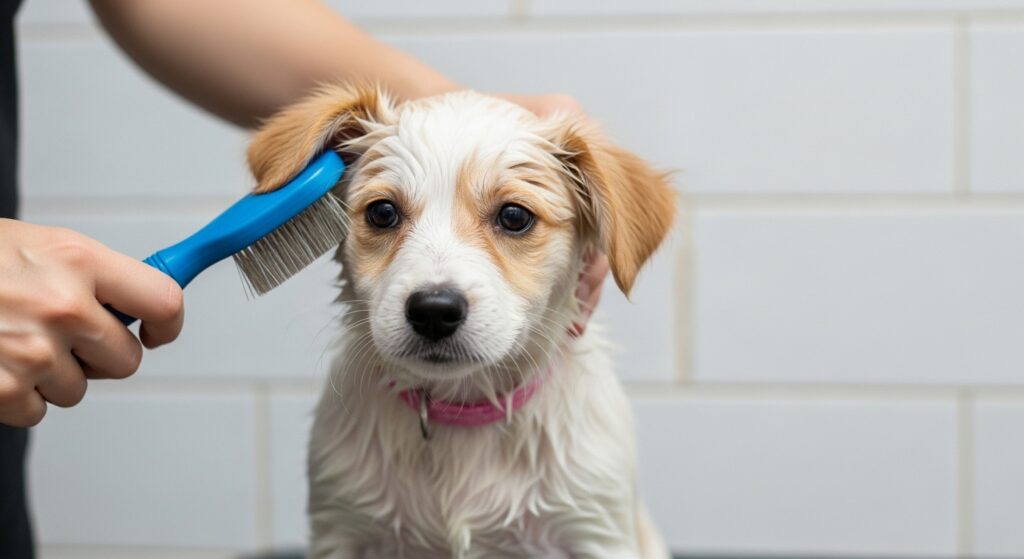
Grooming keeps your puppy clean and healthy. Brush its fur regularly to remove dirt and loose hair.
Bathing should be done once or twice a month depending on the breed.
Clean ears and trim nails carefully.
Poor hygiene can lead to infections and discomfort.
Learn more in our http://Dog Grooming Guide for better hygiene.
8.Exercise and Playtime.
Puppies have boundless energy and require regular exercise.
Play sessions ensure that they remain physically fit and mentally stimulated.
Walks, fetch and chew sessions are good choices.
Be careful about over-exercising young puppies since they are still developing.
9.Common Health Problems.
Diarrhea, worm infection, fleas, and skin disease may affect a puppy’s health.
Symptoms to look out for include vomiting, lack of appetite, or strange behaviors.
Puppies need proper vaccination to stay safe from diseases. According to the https://www.akc.org early vaccination is essential for long-term health.
In case of any problem, see a veterinarian. Delaying will result in more severe issues.
See our full Puppy http://Vaccination Schedule for better care.
10.Sleeping Routine.

Puppies need 16–18 hours of sleep daily.
Provide a quiet and comfortable sleeping area.
A regular sleep schedule helps them grow healthier and calmer.
Avoid disturbing your puppy while it is sleeping because rest is important for development.
Essential Puppy Care Checklist.
•Balanced diet
•Fresh water
•Regular vet visits
•Vaccination schedule
•Daily exercise
•Grooming routine
•Training sessions
•Safe environment
11.Conclusion / Summary.
Puppy care involves time, patience, and commitment.
From feeding, training, grooming, and even taking good care of their health, each activity plays a key role in nurturing your puppy.
With the right care, you can be sure of raising a healthy and loyal dog.
By following this puppy care guide, not only will you have a good relationship with your puppy but also be assured of its longevity in your home.
12.FAQ Section.
1. How often should I feed a puppy?
Puppies should be fed 3–4 times daily depending on age.
2. When should I start training my puppy?
Training should start at 8 weeks of age.
3. How much sleep does a puppy need?
Puppies need around 16–18 hours of sleep daily.
4. Can I give homemade food to my puppy?
Yes, but it should be vet-approved and balanced.
5. When should I take my puppy to the vet?
As soon as you bring it home and regularly for vaccinations.
💁Personal Experience with My Dog Tommy?
Initially, when I adopted the little puppy named Tommy, I never expected to have such a huge amount of work on my hands. He was tiny, active, and quite nervous due to being in an unfamiliar setting. The first night was tough because Tommy kept whimpering, and then I came to realize that he was actually longing for his mommy.
Initially, it was quite difficult to feed Tommy. I did not know which food he should have; however, through research and guidance from experts, I ensured that he was on a healthy diet at regular intervals. Gradually, I observed that his energy levels had risen.
Tommy’s training was enjoyable and yet difficult at the same time. At first, he wouldn’t listen to the instructions; however, after lots of patient training, he was able to learn some simple instructions such as ‘sit’ and ‘come.’
I realized that puppy dogs like Tommy must receive love, affection, and consistency to help them be better behaved. Spending more time with Tommy made me realize that I was making progress with my puppy.
Tommy is now a happy and healthy dog today. From my experience with Tommy, I know that it is important to take proper care of the dogs for them to behave well.
Author Bio:
Jibran Abbas is a passionate pet care writer who creates simple and practical guides for new dog owners. His goal is to help people raise healthy and happy pets through easy-to-understand information.
Disclaimer:
This article is for educational purposes only. Always consult a qualified veterinarian for medical advice regarding your puppy’s health and treatment.